



Announce

Calls for Papers and Contributions

CfP: The Economic History of the Book in the Early Modern Period
Posted: Wednesday, December 13, 2017 - 00:51

Antwerp University, 4–6 October 2018

Proposals: 31 January 2018

A singular carrier of ideas, information, knowledge, and culture, the book has always held a special place in society. Aspects of production, distribution, and consumption have been the subject of thorough study, but analyses of the economics of the book trade remain rare, or less than comprehensive. The special status of the book, its importance for pre-industrial economy as a whole, and the limitations of the sources available seem to have prevented the undertaking of comparative, diachronic, and synchronic surveys from the economics point of view.

Recently, the topic of the economics of the book trade has come to the fore. Scholars acknowledge the importance of the price of books and its impact on society. Especially in the absence of a system of freely accessible libraries, the price of books imposed an important obstacle to access to information and knowledge circulating in print in the Early Modern Period. It is important, therefore, to study the business models for production, price formulation, and market development, starting with information about sales of new and second-hand books sold in shops, at fairs, and at public auctions.

This conference invites papers dealing with any aspects related to the economics of book production, book distribution, and book consumption in the Early Modern Period. Potential topics are the cost of book production; the price of unbound versus bound books; the impact of paper and parchment on production costs; analyses of retail versus wholesale transactions; distribution costs for books (packing, transportation, tolls, unpacking, and insurance issues); and purely monetary issues of the book trade related to payments made in different currencies, in cash or on account. In particular, we welcome papers which address the methodological problems of a historical economical approach to handpress books and the different types of payments and currencies involved, in addition to surveys addressing this issue from a comparative point of view (comparison between printing shops, on local, regional or transnational levels).

We wish to programme papers going beyond isolated cases, and including, for instance, analyses of wider synchronic or diachronic data sets, which will help to clarify essential trends and factors in the economy of the book in Early Modern Europe.

Deadlines Please submit proposals for papers (c. 400 words) to goran.proot@gmail.com by 31 January 2018. You will receive an answer by 15 March 2018.

Academic committee – Dr. Renaud Adam, Université de Liège, Marie Skłodowska-Curie Research Fellow – LE STUDIUM – Institute of Advanced Studies of Loire Valley / Centre d’Etudes Supérieures de la Renaissance (Tours) – Prof. dr. Pierre Delsaerdt, History Department, Antwerp University/KU Leuven – Prof. dr. Kees Schepers, Ruusbroec Institute, Antwerp University – Prof. dr. Johan van Heesch, History Department, KU Leuven/Brussels, Royal Library – Prof. Angela Nuovo, Università di Udine, Department of Humanities and Cultural Heritage - EMoBookTrade project (ERC 694476) – Prof. dr. Jeroen Puttevils, History Department, Antwerp University – Prof. dr. Violet Soen, History Department, KU Leuven – Prof. dr. Bert De Munck, History Department, Antwerp University In collaboration with Antwerp University, Antwerp University Library and the Ruusbroec Institute, the EMoBookTrade project (Università di Udine), Flanders Book Historical Society, Antwerp Bibliophile Society, Museum Plantin-Moretus & Antwerp Heritage Library Hendrik Conscience.
CfP: Angelical Conjunctions: Crossroads of Medicine and Religion, 1200–1800
Posted: Wednesday, December 13, 2017 - 00:48

We invite papers for a conference under the title: Angelical Conjunctions: Crossroads of Medicine and Religion, 1200–1800, to be held at McGill University on April 13–15, 2019.

Proposals: January 10, 2018

"Angelical Conjunction" was the term coined by the seventeenth-century New England Puritan Cotton Mather to denote the mutual affinity of medicine and religion. Indeed, medical and spiritual practices have a long history of coexistence in many religious traditions. This connection took many forms, from the pious provision of health care (in person or through endowed charity), to the archetypal figure of the healing prophet.

Yet despite decades of specialized research, a coherent and analytical history of the "angelical conjunction" itself remains elusive. This conference therefore aims to explore the connection between medicine and religion across the time-span of the late medieval and early modern eras, and from an intercultural perspective.

Taking as our focus the Mediterranean, the Islamic World and Europe, and the various Christianities, Islams, and Judaisms that flourished there, we aim to develop methodological and theoretical perspectives on the "angelical conjunction(s)" of these two spheres. How did the entanglement of religion and medicine shape epistemologies in both of these spheres? What are the conceptions of the body and its relationship to the soul that these entanglements assumed or envisioned? What were the limits to coexistence? How did the "conjunction" change over time?

We invite papers on a range of themes that include, but are not limited to:

  • The relationship between spiritual charisma and medical practice
  • The involvement of medical practitioners in theological debates
  • Medicine and "fringe" religious traditions (e.g. Hermetic, heretical, "occult"…)
  • Representations of the healer-prophet or healer-saint in art
  • Debates on body and soul informed by medical and theological knowledge
  • Spiritualization of physical illness
  • Devotion as therapy, and (the provision of) therapy as devotion
  •  

    Accommodation and meals will be provided. We are seeking grant support to subsidize travel. Please submit an abstract of 300 words and a CV to Dr. Aslıhan Gürbüzel at angelicalconjunctions@gmail.com by January 10, 2018.

    Source: RSA

    CFP: The Space In-Between
    Posted: Wednesday, December 6, 2017 - 20:06

    23rd Southeast Conference

    on Foreign Languages, Literatures, and Films

    March 2-3, 2018

    Celebration, Florida

    Hosted by Stetson University

    and the University of South Florida

    Abstracts for papers to be presented at the 2016 Conference are now being considered. SCFLLF welcomes papers on all aspects of literature, translation studies, linguistics, civilization, culture, film and pedagogy pertaining to foreign languages (ancient and modern). Please submit abstracts (including titles) of ca. 300 words in electronic form on the conference site: site:  www.stetson.edu/scfllf


    We would like to encourage (but not limit to) a working theme for submissions: translations, subtitles, facilitators, prompts or more generally speaking the “space between” in any form in pedagogy, linguistics, literature and film.


    Keynote speaker: Madeleine Straford (Université du Québec en Outaouais)

    Multilingual (French, English, Spanish, and German) Madeleine Stratford is an expert in translation, contemporary poetry, literature and literary multilingualism.  A tireless advocate for the field of translation, Madeleine Stratford is constantly trying to promote this often misunderstood and badly known discipline that she values as a true form of creative art.


    You can submit individual papers as well as fully formed panels. Language of presentations can be English, French, Spanish or German.


    The deadline for submission of abstracts for individual papers and sessions is December 24th, 2017. 

    Selected papers will be published in the proceedings of the conference

    CFP: Kings & Queens Conference 7: Ruling Sexualities: Sexuality, Gender and the Crown
    Posted: Tuesday, December 5, 2017 - 22:57


    The Kings & Queens conference series will be hosted by Historic Royal Palaces and the University of Winchester for its seventh edition on 9-12 July 2018. The first day will be held at Hampton Court Palace with the remaining days at the University of Winchester. 

    We aim to connect scholars across the world whose research focuses on topics related to royal history, diplomacy, art history, political history, biographical studies or any other issues included in the scope of royal studies. This edition of the Kings and Queens conference will have a particular focus on gender and sexuality as central themes. We are especially interested in studies relating to Lesbian, Gay, Bisexual, Trans and Queer (LGBTQ) identities and the role of sexuality and gender to royal histories. 

    We look to gain an understanding of the perceptions, practices and legacies of gender and sexual identities relating to monarchs, royals and their courts, realising that these may have been very different in historic periods to our contemporary understandings. All topics related to these issues will be welcomed, from diverse chronological periods and parts of the world. We hope that interpretation of these topics for the public in heritage contexts will form a particular focus of the day at Hampton Court Palace. 

    We also welcome papers which are unrelated to our central theme and subtopics but contribute more widely to the field of royal studies. 

    The following list includes potential topics for papers, panels or posters, which are suggested as inspiration. Proposers should not feel limited by these topics and we welcome a broad range of ideas and interpretations. 

    Perceptions and Performance 

    • The self-representation of monarchs, royals and courtiers 

    • Royal and court fashion, including cross-dressing 

    • The construction and definition of royal sexual and gender identities, including LGBTQ identities, heterosexuality and straight identities 

    • Asexuality and virgin monarchs 


    Practices 

    • The lives and roles of companions and influencers, including concubines, mistresses and same-sex favourites 

    • The biographies of LGBTQ monarchs, royals and courtiers 

    • Propaganda around sexuality and gender identity, whether positive or negative 

    • Concealed, illicit or hidden royal relationships 

    • Close same-sex friendships 


    Legacies 

    • The posthumous perception and representation of royal sexuality and gender identity, and how this defines legacy and dynasty 

    • The changing historiography and perception of royal sexuality, gender identity and LGBTQ histories 

    • The interpretation of royal gender and sexuality in museum and heritage contexts 


    The conference will include both paper sessions and a poster session at Hampton Court Palace to highlight the developing research of students and early career scholars. Please note that postgraduate students and early career scholars are welcome to give either posters at the Hampton Court session or papers in the general sessions at Winchester, depending on their preference. 

    Individual proposals should indicate whether it is for a poster or paper and include a title, institutional affiliation, an abstract of 250-300 words and a short, one page CV or biography. For panels, the proposal should include a maximum of four different papers accompanied by the same information required for individual proposals and a short rationale of approximately 100 words for the panel. If the panel has an institutional or societal sponsor, please include this with the panel proposal. 

    All proposals should be submitted by 31 December 2017, to kq7winchester@gmail.com and any queries about the conference can also be directed to this address. 

    CFP: V International Conference on Mythcriticism
    Posted: Monday, December 4, 2017 - 20:14

    “Myth and Audiovisual Creation” Madrid, 15th-26th October 2018

    The Conference will be held in four venues (all are either in Madrid or in its outskirts)

    Universidad de Alcalá: “German Myths” (15th-17th Oct.)

    Universidad Autónoma: “Classical Myths” (17th-19th Oct.)

    Universidad Francisco de Vitoria: “Biblical Myths” (22nd-23rd Oct.)

    Universidad Complutense: “Modern Myths” (24th-26th Oct.)


    More information and registration: https://mythcriticism.com/en/


    V

    New Publications

    Pierre de Nancel, Le Théâtre sacré. Dina ou le ravissement, Josué ou le sac de Jéricho, Débora ou la délivrance (éd. Mariangela Miotti)
    Posted: 2 Dec 2021 - 08:28

    Pierre de Nancel,  Le Théâtre sacré. Dina ou le ravissement, Josué ou le sac de Jéricho, Débora ou la délivrance, éd. Mariangela Miotti, Paris, Classiques Garnier, 2021.
    Le Théâtre sacré de Pierre de Nancel fut composé et représenté à l’occasion de l’inauguration des arènes de Doué-la-Fontaine. Les sujets bibliques offrent à Pierre de Nancel l’occasion de retracer l’histoire tragique de son pays que la politique de paix d’Henri IV avait effacée.


    Disponible en librairie et sur le site de l'éditeur.

    Nombre de pages: 467

    Parution: 01/12/2021

    Collection: Bibliothèque du théâtre français, n° 85

    ISBN: 978-2-406-12144-2

    ISSN: 2109-7577

    LA MAISON DE LA TRÉMOILLE AU XVIIIE SIÈCLE (Jean-François Labourdette)
    Posted: 29 Nov 2021 - 15:50

    Jean-François Labourdette, La Maison de La Trémoille au XVIIIe siècle, Paris, H. Champion, 2021.
    « Vous êtes sans contredit un des plus grands seigneurs du Roiaume ; vous avez peu d’égaux, beaucoup de gens au dessous et personne au dessus que les Princes du sang roial […] Vous êtes le plus ancien duc et un des premiers pairs de France ». Voici en quels termes le précepteur du jeune duc de La Trémoille évoquait le rang que son élève tenait dans le royaume de France au milieu du XVIIIe siècle. Parvenir à la dignité de duc et pair constituait l’idéal social de toute la noblesse, car les ducs tenaient le premier rang dans l’État après les princes. Ceux qui menèrent la révolte de la Cour des Pairs contre la monarchie en 1787-1788, continuaient même d’incarner toutes les prétentions politiques de la grande aristocratie, héritière de l’idéologie de Fénelon et de Saint-Simon. La maison de La Trémoille conserva-t-elle au XVIIIe siècle tout ce qui avait fait sa grandeur au cours des siècles précédents : les grandes charges, d’illustres alliances, la gloire militaire, la faveur du Roi, et une fortune bien gérée, lui permettant de manifester sa prééminence sociale ? Autant de questions auxquelles ce livre tâche de répondre.


    Disponible en librairie et sur le site de l'éditeur.

    CollectionBIBLIOTHEQUE HIST.MODERNE ET CONTEMPORAINE

    No dans la collection0066

    Nombre de pages520

    Date de publication27/10/2021

    ISBN9782745356307

    LETTRES DE LA MOTTE À PIERRE DES MAIZEAUX (1700-1744) (éd. Hans Bots, S. Drouin, J. Schillings et A. Thomson)
    Posted: 29 Nov 2021 - 15:46

    Lettres de La Motte à Pierre des Maizeaux (1700-1744), éd. Hans Bots, S. Drouin, J. Schillings et A. Thomson, Paris, H. Champion, 2021.
    Les 298 lettres de Charles de La Motte (vers 1667-1751) constituent le volet le plus riche des papiers de Des Maizeaux (Add, Mss 4281-4289) conservés au département des manuscrits de la British Library à Londres. Dès le début de son établissement en Angleterre, Pierre Des Maizeaux (1673-1745) a dû se rendre compte qu’une relation avec un correspondant jouant un rôle-clé dans la librairie de Hollande, ce « magasin de l’univers », lui était indispensable. Le jeune lettré huguenot Charles de La Motte s’était réfugié dans les Provinces-Unies, où il s’installa en 1689 à Amsterdam, y trouvant bientôt sa place dans le milieu des libraires. En offrant ses services à ces derniers, il réussit à assurer sa subsistance notamment comme correcteur et agent d’édition. Ainsi se mit-il au service de nombreux auteurs, d’où sa réputation de « courtier littéraire ».

    Les lettres de Charles de La Motte échangées avec Des Maizeaux s’étendent sur une période de plus de 40 ans, de 1700 à 1744, et nous offrent un regard varié non seulement sur la librairie de Hollande, mais aussi sur les pratiques d’édition et sur la collaboration d'un côté et de l'autre de la Manche dans la première moitié du siècle des Lumières.

    On y trouve plus particulièrement une information abondante sur les grandes éditions de Pierre Bayle, de Saint-Évremond et de Nicolas Boileau, ainsi que sur la traduction et sur le transfert de la nouvelle philosophie empiriste et de la pensée anglaise en Europe au cours des premières décennies du XVIIIe siècle.

    Enfin, ce dossier des lettres de La Motte, qui contient aussi une dizaine de lettres de Pierre Des Maizeaux, donne accès aux « coulisses de la presse de la langue française dans les Provinces- Unies » et permet d’observer de près l’apport de deux acteurs centraux de l’époque à la presse et au journalisme de Hollande du XVIIIe siècle.


    Disponible en librairie et sur le site de l'éditeur.

    CollectionBIBLIOTHEQUE DES CORRESPONDANCES, MEMOIRES ET JOURNAUX

    No dans la collection0120

    Nombre de pages682

    Date de publication28/10/2021

    ISBN9782745356031

    BIBLIOGRAPHIE DES ÉDITIONS DE GUILLAUME-THOMAS RAYNAL, 1747-1843 (dir. cecil Patrick Courtney)
    Posted: 29 Nov 2021 - 15:41

    Bibliographie des éditions de Guillaumme-Thomas Raynal, 1747-1843, dir. cecil Patrick Courtney, Paris, H. Champion, 2021.
    Guillaume-Thomas Raynal (1713-1796) est connu surtout comme l’auteur (en collaboration avec Diderot et d’autres écrivains) de l’Histoire philosophique des deux Indes, dont la première édition date de 1770 et qui est devenue rapidement un véritable bestseller. Raynal est également l’auteur de plusieurs autres ouvrages, les uns antérieurs à l’Histoire, les autres pendant la Révolution. La présente bibliographie, qui est le fruit de recherches effectuées dans une centaine de bibliothèques, se base sur les principes de la bibliographie matérielle classique et doit beaucoup à la perspective de l’histoire du livre. Elle fournit la description des éditions de tous les ouvrages de Raynal, y compris des traductions ; elle comporte également des précisions sur l’histoire de la publication des éditions originales et des rééditions et comprend aussi des sections consacrées aux pamphlets pour et contre Raynal ainsi qu’à d’autres documents contemporains relatifs à l’étude de son oeuvre et de son rayonnement.

    Comité éditorial : Cecil Patrick Courtney, directeur (Cambridge) ; David Adams (Manchester) ; Gilles Bancarel (Béziers); Daniel Droixhe (Bruxelles et Liège); Claudette Fortuny (Montpellier); Gianluigi Goggi (Pise); Iryna Kachur (Lviv); Hans-Jürgen Lüsebrink (Saarbrück); Nadine Vanwelkenhuyzen (Bruxelles).


    Disponible en librairie et sur le site de l'éditeur.

    CollectionDIX HUITIEMES SIECLES (LES)

    No dans la collection0214

    Nombre de pages562

    Date de publication27/10/2021

    Lieu d'éditionPARIS

    ISBN9782745355720

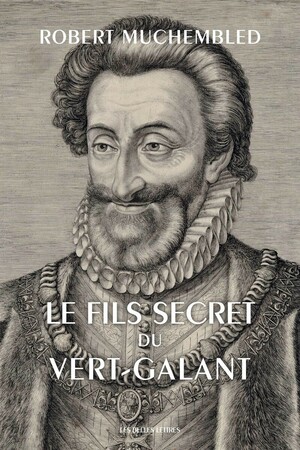
    Le Fils secret du Vert-galant (Robert Muchembled)
    Posted: 29 Nov 2021 - 13:08

    Robert Muchembled, Le Fils secret du Vert-galant, Paris, Belles Lettres, 2021.

    Ce livre n’est pas une biographie supplémentaire d’Henri IV, promu à la fin du XXe siècle idole monarchique des Français. Tentant de résoudre la plus extraordinaire énigme criminelle du temps des guerres de Religion – l’empoisonnement du prince de Condé à Saint-Jean d’Angély en 1588 –, Robert Muchembled démontre la responsabilité assurée d’un commanditaire dissimulé, père naturel, qui plus est, du fils posthume du prince assassiné : Henri de Navarre, futur roi de France.
    C’est donc une histoire (incomplète) de la personnalité secrète du Béarnais qui est ici proposée. Si elle diffère de la mythologie traditionnelle appliquée à son souvenir, elle lui rend toute son humanité : ses qualités et ses succès vont de pair avec des traits moins glorieux, indispensables, probablement, pour survivre et triompher durant l’une des périodes les plus tragiques du passé français. Dénué de scrupules moraux ou religieux, confiant (superstitieusement) en son étoile, le Vert-Galant élimine sans pitié ceux ou celles qui le gênent ; maître de la désinformation, grand producteur de fausses nouvelles, il forge lui-même sa propre légende, dispose de l’un des plus efficaces services secrets du temps, cumule les maîtresses comme un sultan oriental, dont l’épouse de son fils secret, et traite durement celui-ci (héritier au trône intermittent, puis rival de Louis XIII après le régicide).
    Bien qu’il véhicule des images fortes, d’ambitions effrénées, de sang, de poison, de violence, de désirs charnels, dignes de romans historiques ou policiers, le récit, chronologique, appuyé sur les documents d’époque (parfois inconnus, ou souvent mal mis en perspective) présente des faits réels et des personnages qui n’ont rien de fictif. Il invite à découvrir un exercice du pouvoir suprême plus chaotique, baroque et dramatique que celui évoqué par les manuels scolaires.

    Site de l'éditeur.

    488 pages

    Bibliographie, 14 Illustration(s) couleurs

    Livre broché

    16.1 x 24 cm

    Parution : 17/09/2021

    CLIL : 3379

    EAN13 : 9782251452180