Announce

Calls for Papers and Contributions

CfP: Marginalised Voices and Figures in French Festival Culture, 1500–1800
Posted: Wednesday, May 6, 2020 - 10:06

Music Department, King’s College London 24–25 October 2020

Keynote speakers:

Prof. Kate van Orden (Harvard University) Prof. Julia Prest (University of St Andrews)

The last few decades have seen a marked increase in early modern festival research. From royal coronations and ceremonial entries to court ballets and investitures of popes and cardinals, such events were important expressions of courtly, civic, and ecclesiastical hierarchy, community, and tradition. Between 1500 and 1800, France was one of the most prolific and influential centers of festival art in Europe. Indeed, French ‘inventions’ such as the court ballet (ballet de cour), the equestrian carousel, and the comédie-ballet were imitated and emulated across the continent.

However, research on French festival culture has typically focused on traditional centers of power like the royal court, and has either highlighted the contributions of well-known poets, painters, and dance masters or concentrated on the responses of elite spectators like foreign diplomats, princes, and nobles. Our conference instead seeks to shift the focus towards marginalised voices and figures, among them:

Lesser-known musicians, choreographers, poets, and artists who have been overlooked in conventional histories of music, literature, and the arts, namely because they do not conform to narratives of great composers/musicians, poets, and artists, despite being critical to the production and performance of French festivals.

Non-elite people, such as artisans and merchants, who were crucial to the production of festivals, or members from the urban population, who were regularly part of audiences for civic festivities in France, such as ceremonial entries and equestrian carousels.

‘Subaltern’ people, among them women, ethnic and confessional minorities, queer audiences, and colonial populations, who were often involved in the production and performance of French festivals or attended them in person. 

Our conference is interested in both what French festival culture during the period 1500–1800 reveals about these figures, and what this investigation tells us about early modern society on a more global level. What insights does the non-elite or subaltern status of festival contributors offer into early modern perceptions of the arts? What do French festivals tell us about other groups who were generally excluded or oppressed in society? How should we understand the frequent tension between emphasising and erasing the foreign ‘other’ (like the participation of colonial subjects, the use of blackface for racial stereotyping, or the cultural appropriation of valuable colonial objects, etc.)?

Paper proposals

The organisers are keen to encourage an interdisciplinary approach to this subject matter, assembling a balance of musicologists, historians, and scholars in other fields to create a forum for productive exchange. We particularly welcome applications from under-represented groups in academia, such as women, BAME, and LGBTQ+ communities.

We would be interested in any papers that address the following topics:

Investigations of musicians, artists, choreographers, poets, and other festival contributors who have been marginalised in conventional histories of early modern arts.

Analysis of individual festivals, theatrical performances, or ceremonies that involved and/or represented marginalised voices and figures.

Diachronic studies on the involvement and/or representation of marginalised voices and figures.

Research on cultural and diplomatic exchanges between traditional centres of power and commonly marginalised communities, such as colonial populations and confessional minorities. This may include transnational and global approaches to French festival culture.

If you would like to propose a 20-minute paper, please send a brief abstract of about 250 words to marginalisedvoicesconf@gmail.com. When sending your abstract, please also provide a one-page CV with details of your academic experience, affiliation, and publications. The deadline for submitting proposals is Monday 31 August 2020. The committee will make their final decision on submitted abstracts by mid-September 2020. Further information about the programme, registration, travel and accommodation will be announced after that date. The organisers are thinking of inviting conference delegates to prepare a chapter for an edited volume of papers presented at this event.  

Our twitter handle is @marginalisedvo1.

Organisers: Marc W. S. Jaffré (University of Oxford), Bram van Leuveren (University of St Andrews), and Alexander Robinson (King’s College London).

This event is generously supported by the Royal Musical Association and The Society for the Study of French History.

Please note: depending on how the current Covid-19 situation unfolds, this conference may ultimately be scheduled online (e.g. via Microsoft Teams).


CfP: Strangers & Neighbors: Hostility & Hospitality in Late Medieval/Early Modern Contexts
Posted: Thursday, April 30, 2020 - 10:31

May 6–8, 2021 • Notre Dame's London Global Gateway

Is the foreigner friend or foe? The rhetoric around immigration has become ever more heated as globalization, climate change, pandemics, civil wars and proxy wars, the ease of travel, and cross-cultural exchange and encounter have rapidly increased. In the transition from the medieval to the early modern period, a similar intensity in such activity within Europe and outside its borders dominated everything from literature to politics to religion.

A nascent xenophobia makes itself known in disputes between different peoples, of course, but also between members of the same culture. In France, for example, Protestants were often considered a foreign element to be excised. On the other hand, foreigners often fascinated the natives or served as a political tool of comparison in their attempts to affirm or purify their own culture. Either way, representations of and interactions with the foreigner could reveal ambiguity with respect to the newcomer but also within one’s own culture. The stranger could quickly become one’s neighbor, if the conditions were right. This complicates medieval and early modern xenophobia, as fears can be assuaged if certain advantages present themselves.

This interdisciplinary conference, with a special focus on the domains of literature, religion, theology, politics, and history and their intersections, seeks to explore the reality of xenophobia and what role it played in medieval and early modern societies. Do outsiders offer an opportunity for charity or even enlightenment? Are they insidious agents of a foreign power or reinforcements called in to strengthen a purportedly supranational religious identity? Are they rapacious barbarians or civilized partners of trade? This is more than a question of the “Other”; it is about exploring the ambiguities of migration and cross-cultural exchange in the culture and in daily life in a period of religious, political, and cultural upheaval within Europe and beyond.

Paper topics will be especially welcome in the following areas:

Immigration inside and outside Europe

Protestant and Catholic migrations

The virtue of charity

Religion and poverty

Duty and practice of hospitality

Literary representations of the foreigner

Travel narratives

Rhetoric, polemic, and satire

Medieval and early modern theology

Historiography of the stranger

International politics and diplomacy

Spread of disease and treating the sick

Keynote Speakers:

George Hoffmann is a professor of French at the University of Michigan, where he specializes in the literature, history, and culture of sixteenth-century France, with a special focus, among others, on religious studies and the history of the Reformation. He received his M.Phil. from the Université d’Aix Marseille before completing his Ph.D. from the University of Virginia in 1990. Reforming French Culture (2017), his most recent book, argues that religious satire not only fostered the crucial reformed experience of spiritual alienation but that this experience informed the trajectory of French culture more broadly, descending to today’s republican universalism and laïcité.

Anthony Pagden is distinguished professor of political science at UCLA. His research has concentrated on the relationship, cultural, political and legal, between the peoples of Europe and its overseas settlements and those of the non-European world from the Atlantic to the Pacific. His main concern is in the political theory of empire, in how the West sought to explain to itself how and why it had come to dominate so much of the world, and in the present consequences of the erosion of that domination. He has also written widely about cosmopolitanism, nationalism, internationalism and about the history and the future of the European Union. He is the author of more than a dozen books, many of which have been translated into a number of European and Asian languages. His most recent publications include The Enlightenment – and why it still matters (Random House and Oxford University Press) in 2013, and in 2015, The Burdens of Empire: 1539 to the Present (Cambridge University Press).

All lodging expenses for paper presenters will be reimbursed. Some meals provided. Please send an abstract no longer than 200 words and an abbreviated CV to strangers@nd.edu before July 1, 2020. Decisions will be released on or before September 15, 2020. Proposals by advanced graduate students will be considered.

http://sites.nd.edu/strangers-and-neighbors-conference/


CfP: Cultures of Collectivity
Posted: Thursday, April 30, 2020 - 10:10

Women in French

2020 Midwest Modern Language Association Convention

Milwaukee, Wisconsin

November 5-8, 2020

Call for Papers for WIF at the 2020 MMLA Convention (November 5-8 in Milwaukee, WI). This year’s theme is “Cultures of Collectivity.”

Please send a 250-word abstract in French or English along with your academic affiliation, brief bio, and A/V requirements to Jennifer Howell, Illinois State University, jthowel@ilstu.edu by May 31, 2020.

Proposals for complete panels are also welcome.

Notifications will be sent by June 10, 2020. All presenters must be current members of both the Midwest Modern Language Association and Women in French in order to participate.

Additional information can be found on the conference website:

https://www.luc.edu/mmla/convention/

All those interested in Women in French are encouraged to attend.

"I will also organize a dinner out for all WIF panelists and WIF members who would like to join us. Please don’t hesitate to contact me if you have any questions. We look forward to seeing you in Milwaukee!" — Jennifer Howell.

Appel à contributions : Voyage et scandale
Posted: Thursday, April 30, 2020 - 10:08

Ouvrage collectif

On a trop longtemps associé le voyage (réel ou fictionnel) à ses effets bénéfiques. Ainsi, il permettrait le décentrement, la découverte de l’Autre, la mise en perspective des cultures et religions : Homère, Apulée, Montaigne, Voltaire ou l’abbé Barthélémy ont fait école. Certains voyagent pour se soigner (Montaigne), pour retrouver le calme, voire l’inspiration, d’autres pour remonter aux sources culturelles. Mais, par exemple, avant ou derrière le Grand Tour (en lui-même moralement scandaleux, cf. Gilles Bertrand, Le Grand Tour revisité), n’y a‑t‑il pas déjà parfois l’ombre d’un scandale familial, ou au contraire le désir du scandale ? Ainsi, Flaubert et Maxime Du Camp, qui n’en sont pas à leurs premières frasques, embarquant pour l’Orient, espèrent bien se livrer à des facéties exotiques tout bonnement scandaleuses… Et si nous changions notre façon de voir, et envisagions le voyage sous l’angle du choc (cette surprise indignée devant une personne ou une œuvre non conformiste), choc individuel ou collectif, double syndrome de l’Inde et de Florence ? Ou encore si nous envisagions le voyage comme la découverte de ce qui semble incompréhensible, dérange profondément, que l’écrivain tente tout de même de saisir ?

Empruntons pour une fois les chemins scabreux (Dominique Bertrand parle d’« écriture traversière »), difficilement accessibles, jalonnés de difficultés qui incitent à trébucher, sur le chemin de la foi, de la morale et de la raison, des convenances et de l’éducation, et voyons comment le voyage met l’individu hors de lui, révèle une part innommable : il se sent libéré de ses chaînes et est tenté par le plongeon dans l’Inconnu, le grand mal. Quels sont ces écrivains-voyageurs qui créent autour d’eux une aura sulfureuse, dont la renommée les précède en faisant frissonner le public d’incompréhension, d’inquiétude ou de réprobation ? Quels sont ceux qui, grâce au scandale de leurs écrits ou de leurs actes ont permis la transformation d’un monde figé, ou au contraire, sont restés scandaleusement incompris ? Que rapportent ceux qui se font les échotiers des chroniques de cours étrangères scandaleuses ? Pensons aussi aux retours des enfants prodigues et les questions que soulèvent de telles expériences. Dans le récit scandaleux, y a-t-il intégration ou perpétuation de la différence ?

Les libertins, Don Juan et Casanova en tête, voyagent et séduisent, dans l’accumulation des conquêtes et des souffrances, comme preuves insatiables de l’existence, au grand dam de la Morale, mais aussi des bonheurs individuels. Sade fait deux voyages en Italie (et deux récits) avant de produire cette œuvre scandaleuse qu’est Juliette : le scandale est-il dans une civilisation italienne décadente ou dans l’expansion incontrôlée des instincts naturels ? L’Italie est bien « le territoire du désir anglo-saxon » (Yves Clavaron). Mais en France, des intellectuels du début du siècle (Gide, Montherlant…) profitent de l’« exotisme » du Maghreb pour assouvir leurs penchants sexuels réprimés en Europe sans que personne ne se récrie : la chaleur, la couleur exotiques recouvrent pudiquement les scandales viatiques. Un peu avant, Freud voyageait en Italie pour tenter de définir cet indicible scandaleux qu’est l’inconscient… Gauguin fatigué raconte dans Noa Noa comment il découvre Tahiti, y prend femme de treize ans et revit. Jean-Jacques Bouchard visite l’Italie en hérétique et homosexuel et laisse dans ses Confessions un « amas de raffinements d'obscénités ». James Joyce dans Ulysses fait, lui, scandale en 1922 avec une journée de l’errance sexuelle d’un homme chaste attendant sa Pénélope. Les figures mythiques et les parodies mythologiques sont convoquées pour dire le scandale de la guerre chez Claude Simon, par la puissance écrasante de la matière, son autonomie, sa putréfaction (La Route des Flandres, L’Acacia). Mais avec Céline, la farce, l’humour s’invitent dans le Voyage pour dénoncer la folie humaine (voyages sur L’Amiral Bragueton, L’Infanta Combitta et le San Tapeta – tout un programme sexuel), ou le scandale de l’injustice permanente dans Mort à crédit (exemple des torgnoles et du tricar, ou du voyage en Angleterre), scènes qui écœurent et font rire tout à la fois. Sur un mode plus poétique, Jules Romains (Les Copains) raconte, au cours d’un voyage à bicyclette, la scandaleuse atteinte aux bonnes mœurs organisée par une bande d’amis dans deux malheureuses sous-préfectures du Puy-de-Dôme. Plus récemment, Michel Houellebecq alimente la chronique des scandales médiatiques d’œuvres désenchantées, comme Lanzarote et Plateforme, par le traitement de sujets scandaleux (la pédophilie, le tourisme sexuel) ainsi que par la confusion de sa posture d’écrivain qui n’est d’ailleurs pas sans rappeler celle de Céline...

Empan :

Les contributions en langue française porteront en priorité sur des textes d’écrivains voyageurs du XVIe siècle au XXIe siècle.

Les études portant sur des textes viatiques de fiction sont aussi bienvenues.

Les contributions pourront porter sur différents axes :

1. Scandales historiques et biographiques. Quels sont ces écrivains-voyageurs qui sont sujets de scandale ou qui révèlent un scandale, mais aussi qui font ou publient des récits des scandales liés à leur voyage (chroniques de cour…) ?

2. Scandale et littérature de voyage. Le rapport direct du voyage au scandale. Comment le voyage permet-il la libération scandaleuse, comme celle de l’eros peregrinus ? Ou quelle est au contraire la position du voyageur qui juge la scène estrange scandaleuse ?

3. Scandale, stylistique et psychocritique. Quel traitement subit la scène scandaleuse dans la littérature viatique (viol, cannibalisme…), et de quelle manière l’écrivain modifie-t-il (ou non) ses propres codes de bienséance – horresco referens – pour raconter ? L’écriture viatique impose‑t‑elle une mise en scène à la crudité première du scandaleux et fabrique-t-elle le scandale ?

4. Scandale et mélange des genres. Le scandale peut-il être comique ? L’humour noir est-il de mise dans la littérature de voyage ? Quel(s) genre(s) et quel(s) ton(s) ressorti(ssen)t au scandale ? De nombreux sous-genres intègrent le voyage dans leur dynamique interne, comme pour une part de la littérature érotique. L’on pourra aussi considérer l’étude des voyages temporels qui, en déplaçant le scandale d’une époque à une autre, le rendent dicible.

5. Scandale et modernité. Quelle est la portée du scandale et de la transgression dans un monde où, comme le constatait Lévi-Strauss dans Tristes Tropiques, l’ici et l’ailleurs sont identiques ? « Ce que d’abord vous nous montrez, voyages, c’est notre ordure lancée au visage de l’humanité. » D’ailleurs, le voyage n’est-il pas lui-même devenu scandaleux, s’il est polluant, voire spéciste ? De ce fait, outre le dimension anthropocène, la prise en charge éthique du discours anti-voyage scandaleux trouve aussi sa place (« Quelques-uns achèvent de se corrompre par de longs voyages », La Bruyère).

*

La proposition argumentée ne devra pas dépasser 3 500 signes (espaces comprises) et précisera dans quel(s) axe(s) elle souhaite s’insérer. Elle sera suivie d’une courte bio-bibliographie.

Les argumentaires sont à envoyer avant le 31 juillet 2020 à : voyagescandale-patrick@yahoo.com


La publication sera portée par le Centre de Recherche de Littérature de Voyage (CRLV) et le Centre Interdisciplinaires Études Littéraires Aix-Marseille (CIELAM), et éditée par les Éditions Classiques Garnier.

*

Comité scientifique :

Jean-Christophe ABRAMOVICI (PR, Paris-Sorbonne CELLF).

Gaëtan BRULOTTE (PR, Chaire des Sciences humaines, Université de Louisiane à Lafayette, romancier).

Belinda CANNONE (MCF, essayiste, romancière, LASLAR, Caen).

Jean-Claude LABORIE (MCF HDR, Nanterre)

Patrick MATHIEU (MCF, CIELAM, Aix-Marseille) Dir.

Linda RASOAMANANA (MCF, CEREdI, Rouen).

Sylvie REQUEMORA (PR, CIELAM, Aix-Marseille).

Fatima SADIQI, (PR, Centre ISIS et Université Sidi Mohamed Ben Abdellah de Fès, Maroc).

Frédéric TINGUELY (PR, Département de Français, Genève).

Call for contributions: Towards a Theory of Mediterranean Literature
Posted: Thursday, April 30, 2020 - 10:03

Editors: Angela Fabris, Albert Göschl, Steffen Schneider

Mediterranean studies flourish in literary and cultural studies, but if you look at the numerous publications on the subject, it is striking that the concepts of the Mediterranean and the theories and methods used in these are very disparate. Sometimes research focuses more on representations of the Mediterranean – landscape, history, cities – and sometimes more on the origins of authors or their cultural affiliations to the Mediterranean. Sometimes it is more a matter of overarching themes that are of current interest beyond the Mediterranean – migration, questions of inter- and transculturality, post-colonialism – and sometimes very specific aspects such as the Crusades or Mediterranean cities. Of course, we appreciate this fascinating diversity of important questions and topics; nevertheless, we believe that reflections on the foundations of this diverse research are essential to give a clear profile to Mediterranean literary studies. It is our conviction that this profile should be based upon the specific conditions and characteristics of (fictional) literature.

Particularly promising to us seems to be the access via the basic – perhaps least controversial – concept of the Mediterranean as a closely interwoven network of relationships between locally limited communities. Ever since the emergence of the modern concept of the Mediterranean, the idea of the connectedness of Mediterranean cultures has been at the heart of Mediterranean studies: this idea was already expressed by Michel Chevalier when he described the Mediterranean as a "lit nuptial entre l'Orient et l'Occident"; it manifested itself in the 20th century in the conviction of Mediterranean anthropologists that there are specific characteristics of the Mediterranean peoples and their ways of acting, and it underlies the whole magnificent tableau of Fernand Braudel’s opus magnum as well as Albert Camus' concept of the Southern thought ("La pensée du midi"). More recently, these notions of a Mediterranean unity and identity have come under criticism, which is not surprising given that they are the expression of a deeply colonial mentality. However, the critique has not led to an abandonment of the notion of connectedness, but rather to a reformulation under post-colonial and post-structural conditions: connectedness is now no longer conceived of as identity, but as a complex system of identities and differences, as a network linking entities of different size, power, history.

The most brilliant career has probably been that of a pair of terms introduced into Mediterranean research by Peregrine Horden and Nicholas Purcell: connectivity and fragmentation.  Both terms are applied not only in historical scholarship but also in other scientific approaches such as research on geography or biodiversity. The relation between the terms can be seen as complementary as well as antithetical, depending on the interpretation and the research interest. While connectivity refers to the character of the coherence of a system and its resilience as a network, fragmentation points to the factor of diversity and differentiation. The density of the Mediterranean produces a cultural area that can be described by these two factors. The Mediterranean is not a simple geographical or historical unity, but a multiplicity, a network of highly interconnected elements, each of which is different and individual.

Connectivity and fragmentation, if understood as heuristic concepts, might also be useful for Mediterranean literary studies. Indeed, they make it possible to formulate theoretically the diversity of Mediterranean literatures and their potential links within and outside the Mediterranean. As Sharon Kinoshita, among others, has pointed out, it is precisely the connectivity of literary works – their historical, geographical, intertextual references –­ that makes it necessary for Mediterranean literary studies to transcend the boundaries of national philologies, but also the boundaries of individual languages (Kinoshita: Medieval Mediterranean Literature, PMLA 120.2, 2009, 600-608). This raises the disturbing question of whether the connectivity of Mediterranean literature can or should be limited in some way by constructing an inside and an outside of the Mediterranean. One of the most interesting questions is therefore the connection between global and Mediterranean literatures.

However, as obvious as the concepts of connectivity and fragmentation may be in historical studies, biology, etc., they cannot simply be applied to literature, because they refer to the real, material world; literary studies, on the other hand, are concerned with communicative processes, with signs and with mental reality. Although signs do refer to the world, it would reduce the potential of literary texts to understand them only as descriptions of or as statements about reality. Therefore, we encourage the contributors to ask what kind of connectivity and fragmentation literary texts produce, how they build and interrupt references (to the real world, to history, but also to other texts and discourses), how they create and deny communication, and how they take up and reflect literary and non-literary concepts of the Mediterranean.

From the editors' point of view, the following aspects appear to be particularly central – although we are of course open to further suggestions and approaches:

1. Critical analyses of the terms used to express Mediterranean unity and diversity (‘connectivity’ and ‘fragmentation,’ but also alternative and historical concepts)

2. Language: How are Mediterranean multilingualism, language contact situations, interference between languages realized in literature?

3. Form and genre: Are there specific forms of representing Mediterranean connectivity and fragmentation depending on literary genres? What is the role of literary form/genre in the formation of a Mediterranean literature?

4. Intertextuality and intermediality: intertextual references to literary and visual texts from the Mediterranean region and from elsewhere

5. Representation: How is the Mediterranean network, its history and presence, represented/narrated?

6. Social level: the social impact of texts within the Mediterranean, networks of persons and players such as editors, translators, authors in the production, distribution, and consumption of Mediterranean literature

7. Memory: the construction of social/cultural memories, and therefore, identity and otherness in literary works

8. And finally, to what extent does Mediterranean Literature create or actively dissociate the perspective of a Mediterranean Region?

*

The book will be published by De Gruyter as a peer-reviewed publication (double blind and open access). If you are interested in participating we ask you to send us an abstract by June 1, 2020:

steffen.schneider@uni-graz.at, angela.fabris@aau.at, albert.goeschl@uni-graz.at             

Jobs

Assistant Professor, French, MacEwan University
Posted 15 Oct 2017 - 01:18

MacEwan University inspires students through a powerful combination of academic excellence and personal learning experiences. Located in downtown Edmonton, our comprehensive undergraduate university offers over 65 programs to approximately 12,000 FTE students. With a dedication to teaching excellence informed by scholarly research and creative activity, MacEwan provides an exceptional collaborative and supportive learning environment with a commitment to environmental sustainability and opportunities for community engagement and faculty professional development.

The Department of Humanities in the Faculty of Arts and Science at MacEwan University invites applications for a Tenure-Track appointment in French, at the rank of Assistant Professor, commencing July 1, 2018, subject to final budgetary approval.


Although the area of research expertise is open, the successful candidate will haveexperience teaching French language acquisition courses as well as French literature or culture. Native or near-native fluency in French is required. Familiarity with digital humanities, and comfort in a multidisciplinary humanist environment are assets.

Preferred candidates will hold a Ph.D. in a relevant area of expertise and will demonstrate a primary commitment to undergraduate teaching and an ongoing research program. Applicants should submit a cover letter, curriculum vitae, teaching dossier (including recent teaching evaluations), statement of research interests, sample of scholarly work, and academic transcripts. All application materials, including three letters of reference sent directly by referees, quoting the competition number, should be sent to careers@macewan.ca

Questions about this opportunity may be addressed to Edvard Lorkovic, Chair, Department of Humanities.  Contact information available at: http://www.macewan.ca/wcm/SchoolsFaculties/ArtsScience/Programs/Bachelor...


How to Apply:


Only applications received electronically will be considered.  To apply, go to http://www.macewan.ca/careersandselect the job posting. 


Thank you for your interest in employment with MacEwan University. We will be reviewing all applications to select the candidates whose qualifications and experience most closely meet our needs. Only applicants selected for interviews will be contacted.

Job opening: Assistant Professor of French, University of Delaware (specialty 19th century)
Posted 8 Oct 2017 - 16:09

ASSISTANT PROFESSOR OF FRENCH

DEPARTMENT OF LANGUAGES, LITERATURES AND CULTURES, UNIVERSITY OF DELAWARE

Tenure-track position in French. The successful candidate will hold a PhD in 19th-century French literary and/or cultural studies, with a strong commitment to interdisciplinary research and teaching.

Tenure track position available September 1, 2018.  Applications are welcome from candidates whose research focuses on 19th century French literature and culture and one or more of the following areas : ecocriticism (e.g. urbanization and conservation; ideas of nature), science and society (e.g. medical or technological discoveries/discourses), material culture/visual arts (e.g. art exhibitions, art criticism; history of the book; monuments; food; fashion; photography), media studies (e.g. journalistic practices; growth of mass media; pamphlets/propaganda).

Candidates must have a PhD in hand in 19th-century French literary and/or cultural studies at the time of appointment, commitment to an ongoing and productive research agenda, excellence in teaching, and native or near-native fluency in both English and French.  The successful candidate should be prepared to teach courses in language, literature and culture at all levels, from composition and conversation classes to MA seminars.  Expected teaching load: 5 courses per year.  An interest in directing study abroad programs for French is highly desirable.

The University of Delaware recognizes and values the importance of diversity and inclusion in enriching the employment experience of its employees and in supporting the academic mission.  We are committed to attracting and retaining employees with varying identities and backgrounds, and we strongly encourage applications from educators from under-represented groups.  UD provides equal access to and opportunity in its programs, facilities, and employment without regard to race, color, creed, religion, national origin, gender, age, marital status, disability, public assistance status, veteran status, sexual orientation, gender identity, or gender expression.

Candidates should apply with :1) a cover letter addressing qualifications for the position; 2) a current curriculum vitae; 3) a statement of research and teaching interests, explaining how both contribute to the candidate’s interdisciplinary activities; and 4) up to three examples of written scholarship.  Applicants should also solicit three confidential letters of recommendation (which must be uploaded directly by recommenders to Interfolio).   

Inquiries, but not application materials, should be forwarded to Dr. Bruno Thibault, Search Committee Chair, Department of Languages, Literatures and Cultures (thibault@udel.edu).  Review of materials will begin on November 1st, and will continue until the position is filled.

This institution is using Interfolio's Faculty Search to conduct this search. Applicants to this position receive a free Dossier account and can send all application materials, including confidential letters of recommendation, free of charge.

Source: Deborah Steinberger

Scripps College, Tenure-Track Assistant Professor
Posted 29 Aug 2017 - 02:03

SCRIPPS COLLEGE Claremont, CA 91711

Scripps College, a women’s liberal arts college with a strong interdisciplinary tradition, invites applications for a tenure-track position in the department of French Studies at the rank of Assistant Professor to begin in Fall 2018.

We are seeking candidates with primary research interests in one of these fields:

• French and/or Francophone Theater. • French and/or Francophone Visual Culture (e.g. cinema, photography, bande dessinée, digital arts, etc)

We will consider applicants working in any historical period or any geographical area of the Francophone world. A secondary research interest in gender and queer studies is highly desirable as is the ability to engage students in the production and performance of plays in French.

The successful candidate will be a dynamic teacher-scholar with a demonstrated record of excellence in teaching all levels of French language as well as courses in literature and culture at the undergraduate level. The teaching load at Scripps is four courses per academic year, and advising on senior theses is expected. Participation in the Scripps Core Curriculum in Interdisciplinary Humanities is expected. Native or near-native fluency in French and English is required. Ph.D. required. Preference will be given to applicants with a commitment to the College’s goal of improving higher education for underrepresented students.

Review of applications will begin October 15, 2017 and applications must be received by November 17th to be considered. Applicants should send a letter of application, a C.V., and three current letters of reference to Interfolio: https://apply.interfolio.com/44051. Please no email submissions.

For questions, please contact:

Professor Nathalie Rachlin Chair, Search Committee Scripps College 1030 Columbia Avenue Claremont, CA 91711 FrenchSearch@scrippscollege.edu

Scripps College is one of seven members of the Claremont Colleges Consortium located 35 miles east of Los Angeles. In a continuing effort to enrich its academic environment and provide equal educational and employment opportunities, Scripps College actively encourages applications from women and members of historically underrepresented groups.


Publications Manager at UCLA-CMRS
Posted 4 Jun 2017 - 11:25

Job Posting at UCLA Center for Medieval & Renaissance Studies

Requisition Number: 25897

Job Title: Editor, Principal Working Title: Publications Manager

The Publications Manager is responsible for all aspects of the UCLA Center for Medieval and Renaissance Studies (CMRS) publications program, including: negotiating agreements and contracts, identifying potential authors, contributors, or publishers; critically evaluating manuscript submissions and directing them to editorial board members or readers for peer review; editing, proofreading, and translating manuscripts for publication; and overseeing the publication production from manuscript submission to the delivery of digital print-ready files to the publisher.

CMRS’s internationally acclaimed publications include:

  • Viator: Medieval and Renaissance Studies (a scholarly journal published in three 400page issues per year);
  • Cursor Mundi: Viator Studies of the Medieval and Early Modern World (a series of book-length works, three to five volumes published per year);
  • Comitatus: A Journal of Medieval and Renaissance Studies (a graduate student journal published annually); and,
  • International Encyclopedia for the Middle Ages Online (approximately 100,000 words of text translated and edited per year).

As an integral member of the CMRS team, the Publications Manager works closely with:

  1. The CMRS Director and faculty to develop and implement new publication projects and digital publishing initiatives, as well as to provide them with one-to-one editorial assistance;
  2. The CMRS Assistant Director to plan publication-related budgets and programming;
  3. The Program Coordinator to integrate publications into CMRS’s conferences and events;
  4. The CMRS Publicity and Technical Specialist to promote CMRS publications through the web, social media, and other digital technologies; and
  5. The CMRS Financial Analyst to process revenue deposits and royalty and payments to readers and assistant editors.

For a list of required qualifications and to apply, see: mycareer.ucla.edu.

Application Deadline: 18 June 2017.

Visiting Assistant Professor (2017-2018), University of North Carolina at Greensboro
Posted 22 May 2017 - 23:51
Visiting Assistant Professor (2017-2018) in French and Francophone Studies. Apply by June 1st. 
 
The specific courses to be taught will depend on the qualifications of the finalist; the load for VAP is 3/3. The department is a vibrant one that promotes diversity and community engagement; please see our webpage for more details about our programs:  www.uncg.edu/llc.  Please see the generic ad at  https://jobsearch.uncg.edu/postings/3676.

Questions and informal inquiries may be directed to  ​Lisa Janvari (lajanvar@uncg.edu).

Applicants may send materials (vita and names/address​es​ of 3 references) to  ​Lisa Janvari by email, or may submit hard copy applications by mailing to:

University of North Carolina at Greensboro Department of  ​Languages, Literatures, and Cultures

P.O. Box 26170

Greensboro, NC 27402-6165

EOE AA/M/F/D/V"


Source: Women in French (Cybelle McFadden)


New Publications

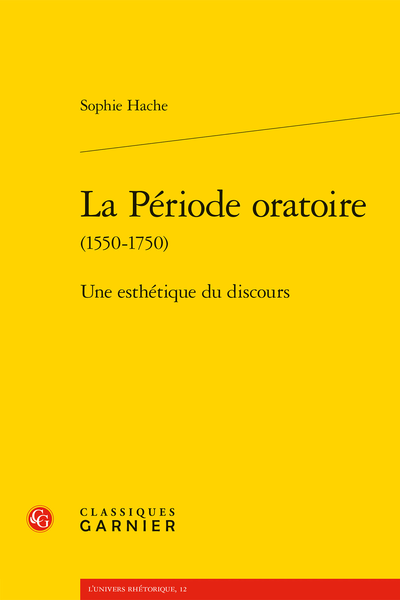
La Période oratoire (1550-1750) Une esthétique du discours (Sophie Hache)
Posted: 19 Jun 2024 - 04:36

Sophie Hache, La Période oratoire (1550-1750) Une esthétique du discours, Paris, Classiques Garnier, 2024.
La période oratoire est une notion clé de la rhétorique : elle représente l’unité de référence pour penser le discours entre la Renaissance et le xviiie siècle. À travers les théories et la pratique de la période oratoire se déploie une esthétique du discours.

Plus d'informations ici.

Nouvelle revue "Les Mains invisibles"
Posted: 19 Jun 2024 - 04:31

Nouvelle revue Les Mains Invisibles

Les Mains Invisibles naissent de la nécessité de redonner aux créatrices des XIV aux XVIIIe siècles (qu’elles soient écrivaines, artistes, architectes, compositrices, traductrices…) la visibilité qu’elles avaient à leur époque, et ont perdu au fil des siècles en raison d’un processus, aujourd’hui bien connu, d’invisibilisation historiographique.

Les Mains Invisibles ont l’ambition de valoriser et d’encourager la recherche aux sujets des femmes créatrices de l’Europe moderne.

Nous avons plusieurs initiatives auxquelles répondent les différentes rubriques du site et du carnet :

La revue annuelle Les Mains Invisibles, consacrée à la diffusion de travaux actuels sur notre sujet ;

Un répertoire de ressources, renvoyant à des initiatives proches déjà existantes (associatives ou universitaires) ;

Une base bibliographique, destinée à valoriser les productions internationales déjà existantes et à orienter les personnes intéressées ;

Une base de textes courts, mettant à disposition des enseignants et enseignantes du secondaire ou du supérieur du matériel adapté à un usage pédagogique (type commentaire de texte).

Appel à candidatures – Comité de rédaction

Le comité de rédaction de la revue Les Mains Invisibles cherche à compléter son équipe.

Les tâches sont variées et comprennent la prise de décisions collectives (notamment sur les stratégies et projets futurs de la revue ou les thématiques des prochains numéros), l’évaluation d’articles scientifiques et de recensions d’ouvrages, la relecture et la mise en forme des articles retenus ou l’animation des outils de communication de la revue (Twitter et newsletter). Plus globalement, les membres du comité de rédaction sont les porteur.ses du projet et peuvent donc y trouver un espace où donner forme à des idées susceptibles de correspondre à l’identité de la revue.

Résolument engagée en faveur de l’open access, la revue propose des rubriques « En ligne/Varia », « Comptes rendus » et « Entretiens » qui sont directement accessibles sur son site web : www.lesmainsinvisibles.wordpress.com. La revue a à cœur d’accompagner les auteur·ice·s dans leur travail de rédaction, quel que soit leur statut, pour peu que les textes proposés répondent aux exigences de l’écriture scientifique. Particulièrement ouverte aux contributions de jeunes chercheur·se·s, la revue est elle-même animée par des chercheur·se·s, doctorant·e·s ou jeunes docteur·oresse·s, et peut s’appuyer sur des comités scientifiques et de lecture internationaux.

Profil

Les candidat·e·s auront, idéalement, le profil suivant :

être un·e chercheur·e en sciences sociales, de préférence en histoire, histoire de l’art, langues, littératures ou études culturelles ;

être disposé·e à s’engager pour minimum un ou deux ans dans le projet de la revue

aimer travailler en équipe, dans une ambiance conviviale mais avec des objectifs précis à réaliser ;

être disposé·e à investir du temps et de l’énergie dans ce projet éditorial ;

être en mesure de participer à des réunions ponctuelles

Modalités de candidature

Les candidat·e·s intéressé·e·s peuvent envoyer leur CV ainsi qu’une brève présentation bio-bibliographique à lesmainsinvisibles.revue@gmail.com.

source: https://lmi.hypotheses.org/283

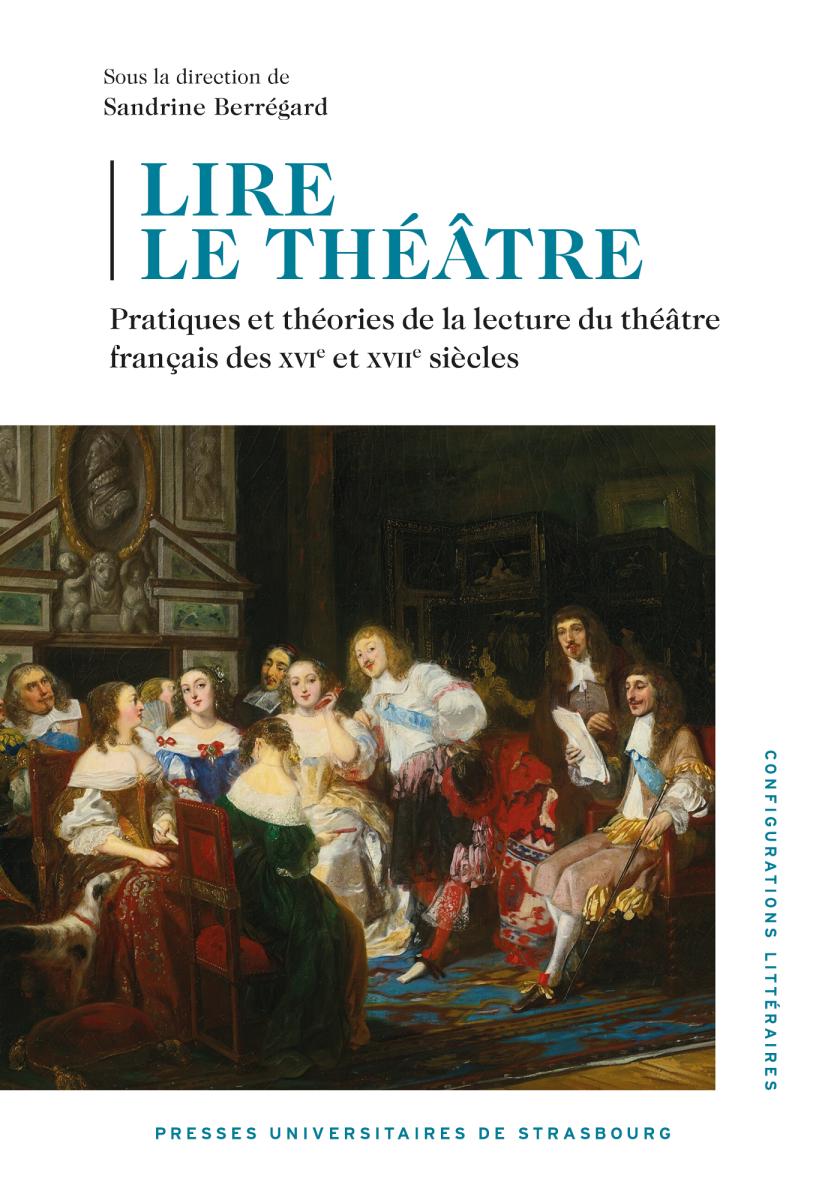
Lire le théâtre. Pratiques et théories de la lecture du théâtre français des XVIe et XVIIe siècles (dir. Sandrine Berrégard)
Posted: 19 Jun 2024 - 04:28

Lire le théâtre. Pratiques et théories de la lecture du théâtre français des XVIe et XVIIe siècles, dir. Sandrine Berrégard, Strasbourg, Presses universitaires de Strasbourg, collection « Configurations littéraires », 2024.
 

Présentation de l’éditeur :

Ce volume collectif réfléchit sur les conditions de possibilité de la lecture du texte théâtral, conçue ou non en rapport avec la réalisation scénique. Paradoxale, la proposition s’avère néanmoins pertinente pour une approche nouvelle de l’acte lectorial et des différentes catégories de lecteurs des XVIe et XVIIe siècles. L’auteur, mais aussi l’éditeur et l’imprimeur, déploient des stratégies spécifiques, qui varient selon les usages et le public visé (honnête homme, amateur, savant, professionnel). C’est à étudier ces stratégies que travaillent les textes ici réunis..

Plus d'informations ici.

22 | 2024 – Sur les déclamations (dir. Blandine Perona), revue en ligne Exercices de rhétorique
Posted: 19 Jun 2024 - 04:19

22 | 2024 – Sur les déclamations (dir. Blandine Perona), revue en ligne Exercices de rhétorique (UGA Éditions, publication Cléo/OpenEdition) à l’adresse suivante :

https://journals.openedition.org/rhetorique/

---------------------------------------

Exercices de rhétorique

Direction
francis.goyet@gmail.com
christine.noille@sorbonne-universite.fr
cecile.lignereux@univ-grenoble-alpes.fr


22 | 2024
Sur les déclamations

·         DOSSIER. La déclamation au début de l’époque moderne : une institution oratoire

Sous la direction de Blandine Perona

Blandine Perona

La déclamation au début de l’époque moderne : une institution oratoire [Texte intégral]

Sophie Conte

Les frontières de la déclamation dans l’Institution oratoire de Quintilien [Texte intégral]

Laurent Baggioni et Blandine Perona

La déclamation de Lucrèce : rhétorique, pédagogie et méditation de l’Histoire [Texte intégral]

Eric MacPhail

Érasme et la théorie de la déclamation [Texte intégral]

Christine Bénévent

Le statut de la declamatio dans les textes d’Érasme sur la théorie et la pratique épistolaires [Texte intégral]

Rémi Ordynski

Déclamation, lettre et consolation : le cas de la Déclamation sur la mort d’Érasme [Texte intégral]

Kees Meerhoff

L’éloge de l’éloquence (1523) par Philippe Melanchthon : une leçon par l’exemple [Texte intégral]

Aline Smeesters

Déclamations et disputes quodlibétiques à l’Université de Louvain : le cas de Petrus Nannius [Texte intégral]

Tristan Vigliano

Declamatio contra cæcum, declamatio contra cæcos : sur un opuscule de Juan Luis Vives [Texte intégral]

Catherine Schneider

Un pastiche du pseudo-Quintilien dans la Venise des Lumières : les Antilogies de Lorenzo Patarol (1743) [Texte intégral]

Léa Gariglietti

Battre du tambour dans la déclamation sophistique. Métaphore et polysémie de τυμπανίζειν dans le Theatrum veterum rhetorum de Louis de Cressolles (1620) [Texte intégral]

Emma Fayard

Déclamation et copia à l’heure du tweet : retour sur une expérience pédagogique [Texte intégral]

·         DOCUMENTS. Cinq déclamations

Coluccio Salutati

Déclamation de Lucrèce (s. d.) [Texte intégral]

Érasme

Apologie pour la déclamation à la louange du mariage (1519) [Texte intégral]

Érasme

La déclamation sur la mort, dans le genre consolatoire (1517) [Texte intégral]

Petrus Nannius

Déclamation quodlibétique sur l’éternité du monde (1549) [Texte intégral]

Juan Luis Vives

Pour la belle-mère, contre l'aveugle (1523) [Texte intégral]

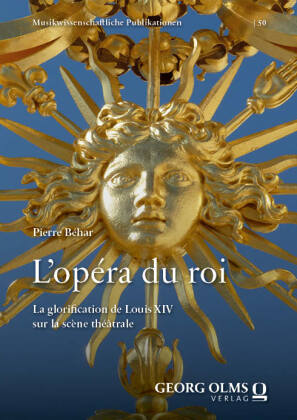
L’Opéra du roi. La glorification de louis xiv sur la scène théâtrale (Pierre Béhar)
Posted: 19 Jun 2024 - 04:17

Pierre Béhar, L’Opéra du roi. La glorification de louis xiv sur la scène théâtrale, Hildesheim, Olms, 824 pages.
ISBN 978-3-487-16714-5
Site de l'éditeur: http://www.edition-olms.com

Conferences and Colloquia

Society for Early Modern French Studies 2017 conference: Modernity and Its Discontents
Posted: 24 Jul 2017 - 20:30

Durham Castle, 11-13 September

The Programme for the conference will be as follows:

Monday 11 September

 14.15              Arrival and Registration    

14.45               Welcome, Richard Parish, Chairman of the Society 

Session 1:      Cécile TRESFELS (Stanford University): Remembering the Past, Apprehending the Future: Fear and Knowledge in Marguerite de Valois’ Memoirs

John O’BRIEN (Durham University): Modernity, the Dispassionate Historian and the Reader in Agrippa d’Aubigné’s Histoire Universelle

Session 2:       Alice ROULLIÈRE (Trinity Hall, Cambridge): Ronsard and the ghost of Astyanax 

Anthony BRUDER (King’s College, Cambridge) Counter-Cultural Poetics in the Recueil of Claude Fauchet

Rowan TOMLINSON (University of Bristol): ‘Escrivons tous, sçavans et non sçavans’: the profession of writing, social status, and ideals of style in the vernacular Republic of Letters (1556-1621)


Tuesday 12 September  

Session 3:      William McKENZIE (Durham University): ‘Un fond […] limonneux et poisant’ (or) How Montaigne muddies the pool of modern narcissism

Adam HORSLEY (University of Nottingham): ‘Imite qui voudra les merveilles d’autrui’: Modernity and Imitation at the Trial of Théophile de Viau 

Jonathan PATTERSON (St Hilda’s College, Oxford): In whose interest? Rhetorical arguments about monetary reform in the early seventeenth century 

Session 4:      Jan CLARKE (Durham University): Modern versus Ancient in the Décor of the Seventeenth-Century French Stage

Ramona-Dana LUNGU (University of Bristol): Longepierre’s Électre: a different way of telling the same story

Joanna BARKER (Durham University) ; Ancient Men & Modern Women: Madame Dacier and the Querelle d’Homère

Session 5:     Keynote paper.  Michael MORIARTY (Cambridge University): Pascal’s Modernity


Conference Dinner, Senate Room, Durham Castle


Wednesday 13 September      

Session 6:      William DINNING (London): Pascal, Reluctant Modernist?

Lisa AL-FARADZH (Murray Edwards College, Cambridge): The Port-Royal Bible and the challenge of modernity

Session 7:      Jean-Alexandre PERRAS (Jesus College, Oxford): The Decay of Genius: Petits Maîtres and Butterflies

Robin HOWELLS (Birkbeck, Uiversity of London): Bernardin de Saint-Pierre’s ‘Entretiens’ (1773): rewriting Fontenelle

 Session 8:      Linda NAUNAPPER (Independent Scholar, Wisconsin and Illinois Archaeological Surveys, USA): Leaving the Ancien Régime Behind: Archaeology and the Culture History of frontier New France

Lunch

2pm Conference close

To book tickets please go to http://www.semfs.org.uk/conference/

KNOWLEDGE IN CONTEXT: COLLOQUIUM BROCKLISS-JONES
Posted: 24 Jul 2017 - 18:32

September 22-23 2017

University of Oxford

In 1997, Laurence Brockliss (Magdalen College, Oxford) and Colin Jones (QMUL) published The Medical World of Early Modern France, a landmark in the history of medicine because of its integration of social and institutional history with intellectual history.  It established a vibrant new approach to the history of medicine and knowledge of the early modern period while also encouraging Anglo-French intellectual exchange.  As 2017 is the twentieth anniversary of this work’s publication and the year of Laurence Brockliss’s retirement, colleagues and former pupils have organized a colloquium in their honour.  Scholars from a range of historical disciplines (classical scholarship/antiquarianism, philosophy, and the natural sciences) will discuss the ways in which knowledge is contextualized in early modern Europe and Britain.  Participants are also from a variety of national perspectives and locations, demonstrating the range of Brockliss and Jones’s impact in integrating intellectual history with other sub disciplines of history.  

Organizers: Erica Charters, Floris Verhaart, François Zanetti

Registration: £40 (£20 for students/ECR/unwaged), to open 1 August.

For more details: http://www.wuhmo.ox.ac.uk/event/knowledge-context-colloquium-brockliss-jones

Sponsors : Magdalen College, Oxford; Society for the Social History of Medicine; Florida State University; Queen's University, Belfast; History Faculty, Oxford. 


Early Modern 'transformissions': Linguistic, Material, and Cultural Translation in England and France (c. 1470-1660)
Posted: 29 Jun 2017 - 18:07

The programme of the international conference, 'Early Modern 'transformissions': Linguistic, Material, and Cultural Translation in England and France (c. 1470-1660)' is now up on at http://www.translationandprint.com/transformissions17-programme

The conference will take place at the Université de Montreal on July 5-7, 2017, and will gather scholars of  translation, literary studies, book studies, cultural history, and digital humanities to examine the intersections between early modern translation and book culture in England and France. The programme includes a plenary address by Randall McLeod (University of Toronto), a workshop at the UdeM's Rare Book Library, and bilingual panels on the various forms and modes of 'transformission' in the early modern Anglo-French cultural zone. Please visit the website (www.translationandprint.com/transformissions17<http://www.translationandprint.com/transformissions17>) for more information.

Note that space is limited, so please contact Marie-Alice Belle (marie-alice.belle@umontreal.ca<mailto:marie-alice.belle@umontreal.ca>) if you are planning to attend.

Marie-Alice Belle (Université de Montréal); Brenda Hosington (Université de Montréal/University of Warwick)


Habiller la norme. À propos des vêtements monastiques féminins: règlements, habitus, (r)habillages et lessivages (XVIe-mi-XXe s.)
Posted: 27 Jun 2017 - 19:47

Paris, 30 juin 2017

Jardin des Plantes, Grand amphithéâtre d’entomologie, 43 rue Buffon (Paris 5e), 14h-16h

Avec Nicole Pellegrin, Historienne et anthropologue (IHMC, CNRS-ENS)

«Au risque de se perdre», la moniale se devait d’être revêtue, de sa prise de voile à sa mort, d’un «saint habit» chargé de dire son appartenance à un sexe, à un ordre religieux, à un statut hiérarchique, à une fonction, voire à un lieu. Signe présumé de pauvreté consentie, de chasteté assumée, d’obéissance glorieuse et de vie nouvelle, le vêtement de religion est «modeste» et «réglé». Malgré d’innombrables variantes temporelles et géographiques, sa normativité mérite d’être confrontée à d’autres modes, plus actuelles mais tout aussi codifiées, qu’elles soient religieuses ou laïques.

À l’aide de textes règlementaires et (auto)biographiques, à l’aide plus encore ici de fictions littéraires, picturales et filmographiques qui mettent en scène saintes fondatrices, humbles converses et sœurs «dévoyées» ayant vécu entre le XVIe siècle et le concile de Vatican II, le parcours visuel proposé cherche à faire comprendre le jeu des rituels d’investiture et d’avilissement, mais aussi les contraintes matérielles de parures où le blanc doit être toujours plus blanc.

– Aboudrar (Bruno Nassim), Comment le voile est devenu musulman, Paris, Flammarion, 2014. – Arnold (Odile), Le corps et l’âme. La vie des religieuses au XIXe siècle, Paris, Seuil, 1984. – Diderot (Denis), La Religieuse (1796), diverses rééditions en poche dont celle d’Annie Colognat-Barrès, Paris, Pocket, 1997. – Henneau (Marie-Elisabeth), « Se vêtir au couvent quand on est femme ! », Quand l’habit faisait le moine, Bastogne, Musée de Piconrue, 2004, pp. 139-161. – Lambin (Rose), Le Voile des femmes. Un inventaire historique, social et psychologique, Berne, Peter Lang, 1999. – Muzzarelli (Maria Giuseppina), Histoire du voile. Des origines au foulard islamique, Paris, Belin, 2017. – Pellegrin (Nicole), «Quand le voile fait son cinéma», in Claude Coupry et Françoise Cousin (dir.), Lumières sur le blanc, Paris, Sépia et AFET, 2014, pp. 129-139. – Pellegrin (Nicole), «Au risque de se perdre» et «Les voilées de la Révolution», Modes Pratiques, n° 1 (« Normes et transgressions »), 2015, pp. 6-25, et n° 2 (« Sans la mode »), 2016, pp. 91-108.

Moniales et religieuses : espaces communautaires au féminin Ve-XVIIIe siècle
Posted: 27 Jun 2017 - 19:46

Vienne, 16-18 novembre 2017

Dès les origines orientales de la vie régulière, on rencontre des communautés de femmes. Cependant, l’historiographie ne leur a pas accordé l’attention soutenue dont ont bénéficié les monastères d’hommes. Leur inscription sociale et ecclésiale, l’origine et le nombre des sœurs, leurs pratiques liturgiques et leurs formes de vie : tout cela n’est connu que de manière fragmentaire, surtout pour les périodes hautes. A fortiori est-on peu renseigné sur la structure et l’aménagement des espaces de vie et de célébration. C’est pourquoi la fouille du site viennois de Saint-André-le-Haut apparaît comme exceptionnellement riche en données nouvelles, tout autant qu’en questions ouvertes. Il a semblé que le moment était bien choisi pour faire, à partir de ce cas remarquable, un bilan d’étape de la recherche sur les moniales et religieuses du double point de vue de l’archéologie et de l’histoire. Une chronologie longue, des origines à la suppression révolutionnaire des vœux de religion, s’est imposée comme une nécessité méthodologique pour montrer les continuités et identifier les scansions d’une histoire étonnamment variée.

Médiathèque Le Trente, auditorium

Organisé par : ArAr – Archéologie et Archéométrie, UMR 5138 – Lyon

Inscription obligatoire avant le 10 octobre 2017

Programme et formulaire d’inscription : http://siefar.org/moniales-et-religieuses/

Source: SIEFAR.org