



Announce

Calls for Papers and Contributions

Nouvelle date limite : « La spiritualité de l’Âge Classique au miroir du XIXe siècle »
Posted: Thursday, November 5, 2020 - 10:01

Chères et chers collègues,

Après une petite mise en pause imprévue de nos activités du fait d'un problème technique du site du CAHSA, nous sommes heureux d'annoncer que la date limite pour la réception des propositions pour notre séries d'études en ligne est maintenant le 25 novembre 2020. Les trois sessions se tiendront en janvier, avril et juillet 2020. Nous serions ravis de recevoir vos propositions!

(La version anglaise suit)

Appel à contributions

Sessions d’études numériques

La spiritualité de l’Âge Classique au miroir du XIXe siècle

Le Collectif d’Anthropologie et d’Histoire du Spirituel et des Affects, le CASHA (www.cashanet.org), sollicite des contributions pour ses prochaines sessions d’étude en ligne, qui feront office d’ateliers préparatoires en vue du colloque « La spiritualité de l’Âge Classique au miroir du XIXe siècle » initialement prévu à Chicago en octobre 2020 et reporté à l’automne 2021 en raison de la crise sanitaire. Invitant les participant·e·s à réfléchir aux problématiques décrites ci-dessous, ces sessions se déclineront en trois volets suivis, dont le détail est mentionné plus bas.

Ce format d’étude expérimental voudrait, par rapport au colloque « traditionnel », étendre les échanges scientifiques à tout le processus de recherche (choix du corpus, définition d’une problématique, etc.) impliqué dans la production d’une communication. Anticipant le colloque en présentiel qui se tiendra à Chicago (automne 2021), ces ateliers préparatoires visent en outre à renforcer l’interaction entre chercheur·e·s intéressé·e·s aux enjeux historiques, anthropologiques ou littéraires de l’iconographie ou des textes religieux à l’âge classique. Il serait préférable que les personnes intéressées s’inscrivent aux trois sessions de travail, de façon à assurer la cohérence entre les ateliers. La participation au colloque 2021 n’est pas requise mais souhaitable, dans la mesure où les groupes des ateliers en ligne formeront des panels lors de ce colloque. À cette occasion, les communications pourront être données par visioconférence, si nécessaire.

La date de notre évènement en présentiel en 2021 n’est pas encore déterminée. Elle sera choisie en fonction des nouvelles dates du colloque de la Société d’études pluridisciplinaires du dix-septième siècle français (SE17), afin que le colloque du CAHSA se tienne le jour précédent ou suivant le colloque de la SE17.


I.    Perspectives de recherche

Ces sessions d’études en ligne exploreront les métamorphoses ou la continuité au XIXe siècle de la spiritualité des XVIIe et XVIIIe siècles dans la France et ses colonies. Les intervenant·e·s seront notamment invité·e·s à questionner les transformations des pratiques religieuses héritées des siècles anciens, à travers la réédition de textes spirituels ou l’évolution architecturale et matérielle des lieux et objets de culte. Ils pourront s’intéresser notamment à l’influence du contexte historique (du Concordat à l’après 1870) sur la réactualisation et/ou la récupération idéologique des textes et des pratiques religieuses, dans une perspective qui englobe aussi bien l’histoire de l’Église que l’histoire du livre ou l’histoire des idées. Une attention particulière pourra être accordée aux écrivains qui ont fait de la spiritualité classique une pierre de touche de leurs œuvres (Chateaubriand, Lamartine, Constant, etc.) et aux sensibilités individuelles ou collectives exprimées vis-à-vis de l’héritage religieux (qu’il s’agisse d’admiration ou de rejet). Les contributions pourront en outre évaluer, entre auteurs et publics, l’influence de l’horizon d’attente (convictions, croyances et sensibilités des fidèles ; sociologie du lectorat ; goûts et affects) sur la production ou la reproduction de textes et objets à connotation spirituelle.

Les problématiques à explorer incluent, de manière non limitative :

L’histoire du livre, notamment les rééditions du Grand Siècle, les éditions, leur lectorat, le choix des textes, et leur possible remaniement, ou censure. Ceci tant pour la période du Concordat et de la Restauration que de l’après 1870.

L’histoire et l’évolution de la doctrine, de la théologie, et de la liturgie, incluant les problèmes liés à l’adaptation langagière, dogmatique ou scénique des textes et des pratiques d’un siècle à l’autre.

La littérature pieuse des XVIIe et XVIIIe siècles republiée et/ou réadaptée au XIXe siècle en fonction de nouvelles exigences, que celles-ci viennent des éditeurs ou des publics.

Les problèmes de censure liés à des spiritualités perçues comme dissidentes ou jugées proches de courants estimés dangereux ou hérétiques, tels que le quiétisme, le théisme, et l’efflorescence de nouvelles religiosités politiques avec le Romantisme.

Les raisons politiques, idéologiques, ou encore historiques de la réadaptation des textes et des pratiques de l’Âge Classique au XIXe siècle. On pourrait s’intéresser, dans cette perspective, à l’endiguement antirévolutionnaire, à l’expansion coloniale ou à la critique marxiste de la religion-opium.

Les objectifs et les projets missionnaires du XIXe siècle, qui s’appuient sur des modèles des siècles précédents.

Les cas de béatification et de canonisation au XIXe siècle des figures des XVIIe ou XVIIIe siècles et les raisons de leurs succès ou de leurs échecs.

La réimagination, recréation ou restauration au XIXe siècle de l’iconographie ou de l’architecture religieuse des XVIIe et XVIIIe siècles.


II.  Déroulement des sessions de travail :

Les dates des ateliers d’avril et de juillet seront choisies après consultation avec les participants.

Premier volet (23 janvier 2021). Après une présentation générale des objectifs de recherche et du déroulement des ateliers, cette session de travail proposera aux participant·e·s de présenter (en français ou en anglais) un corpus en lien avec la problématique du colloque. Les participant·e·s seront répartis en petits groupes, en fonction du type ou des enjeux de leur corpus. Les présentations seront suivies d’une synthèse, qui tentera de saisir les réminiscences et la vitalité de la spiritualité classique au XIXe siècle, qu’elles attestent de continuités, de métamorphoses ou de ruptures.

Deuxième volet (avril 2021) Cette deuxième session invitera les participant·e·s (répartis dans les mêmes groupes) à présenter une problématique définie en lien avec leur corpus et soumise (3-5 pages) aux autres membres du groupe une semaine avant la session de travail. Les échanges de cette séance doivent permettre à chaque participant·e d’approfondir, de compléter ou de réorienter leur problématique en fonction des commentaires et/ou des pistes bibliographiques suggérées par les collègues.

Troisième volet (juillet 2021) Sur la base des échanges des deux premières sessions, les participant·e·s identifieront les points de contact entre leurs problématiques respectives et dégageront les enjeux communs de leurs corpus. Les résultats de ces échanges serviront à la définition d’un cadre théorique ou épistémologique qui sera présenté lors du colloque en présentiel, par exemple en tête des panels, de manière à situer les communications individuelles et à préciser leurs enjeux.


III. Format des sessions :

Chaque atelier numérique durera environ 2h et se déroulera comme suit :

30 min. :          Accueil des participant·e·s et présentation de la session

60 min. :         Travail en petits groupes (4-5 pers.), en utilisant la fonction "Zoom Breakout Rooms"

30 min. :          Mise en commun, avec tou·te·s les participant·e·s


IV. S’inscrire :

Nous invitons les collègues intéressé·e·s à nous adresser des propositions, en français ou en anglais. Toute personne désireuse de participer à ces sessions d’études en ligne peut se manifester auprès de joy.palacios@ucalgary.ca et de groupecahsa@gmail.com, en présentant un bref descriptif (max. 1 page A4) du corpus et de la problématique qu’elle voudrait présenter lors de ces ateliers. Les propositions devront être envoyées par courriel avant le 25 novembre 2020.

Les participant·e·s devront devenir membres du CAHSA avant la première session de travail. L’adhésion se fait à www.cahsanet.org ($15 CAD/an, payable par PayPal).

Comité organisateur :

Joy Palacios, Université de Calgary

Arnaud Wydler, Université de Fribourg

Richard Reinhardt, Université de Michigan

Marc Court, chercheur indépendant

Marion Robinaud, LabEx HASTEC (EPHE/PSL/EHESS/CNRS/Césor)


Comité scientifique :

Anne Régent-Susini, Université Sorbonne Nouvelle, Paris 3

Emmanuelle Friant, Université de Montréal

Corinne Bayerl, Université d’Oregon

*** *** *** *** *** *** *** *** ***

Call for Papers

Online Workshop Series

Spirituality of the French Classical Period through the Prism of the 19th Century

The Collectif d’Anthropologie et d’Histoire du Spirituel et des Affects, or CAHSA (www.cahsanet.org), invites proposals for its upcoming series of online workshops, which will serve as seminars building toward its conference on the theme “Spirituality of the French Classical Period through the Prism of the 19th Century” in Chicago in fall 2021. These workshops, described in more detail below, will enable participants to develop their work through a three-stage process of dialogue and exchange.

In relation to the “traditional” conference planned for fall 2021, this experimental format aims to support the entire research process that the writing of a conference paper implies, from the choice of a corpus of texts to the articulation of a central problem or question. Each workshop will likewise foster scholarly inquiry and discussion among researchers interested in the historical, anthropological, and literary stakes of the religious texts and iconography of the French classical period. Our hope is that participants will be able to contribute to all three workshops so as to generate a coherent conversation that builds from session to session. Participation in the 2021 conference is not required, although desirable, as our vision is that the small groups that will work together over the course of the three workshops might develop into panels at the conference. Although we are planning for an in-person conference in 2021, it will be possible to give papers using a platform such as Zoom, if necessary.

The date of the 2021 conference is yet to be determined but will be chosen according to the new dates for the Society for Interdisciplinary French Seventeenth-Century Studies (SE17), so that CAHSA’s conference will take place either the day before or after SE17.


I.    Conference Theme

Our online workshop series and the conference toward which they build will explore the way writers, thinkers, artists, and religious practitioners of the 19th century adopted, preserved, or transformed the spirituality of 17th and 18th century France and its colonies. We invite participants to interrogate transformations and continuities in the religious practices inherited by the 19th century from the early modern period as evidenced in the reedition of spiritual texts or the architectural and material evolution of religious spaces and devotional objects. Inquiries may also consider the historical context (from the Concordat to the period after 1870) and its influence on the re-actualization and/or ideological recuperation of religious texts and practices, taking into account histories of the Church, the book, and of ideas. Writers who made the spirituality of the French classical age a touchstone for their work merit special attention (Chateaubriand, Lamartine, Constant, etc.), as does the way these works leverage the religious heritage of the early modern period (whether in a mode of admiration or rejection) to express individual or collective sensibilities. Papers may likewise evaluate the relationship between authors and publics, examining the way factors such as religious beliefs and doctrines, the demographics of different readerships, or taste and affect influenced the production and reproduction in the 19th century of spiritually inflected texts and objects from the 17th and 18thcenturies.

Suggested areas of focus include but are not limited to:

The history of the book, especially that which is reedited from the Grand Siècle, the various editions, their readers, the choice of texts, and their possible modification or censorship, both for the period of the Concordat and the Restoration as well as for after 1870.

The history and evolution of the doctrine, theology, and liturgy of the French classical period in the 19th century, including questions related to the adaptation of language, dogma, and modes of theatrical or visual representation from one century to another.

The devotional literature of the 17th and 18th centuries republished or readapted in the 19th century according to new expectations, whether these derive from editors or their publics.

The question of censorship in relation to spiritualities perceived as dissident or judged too close to religious movements deemed dangerous or heretical, such as quietism, theism, and the development of new political religiosities with Romanticism.

Political, ideological, and historical reasons for the re-adaptation of texts and practices from the French classical period in the 19th century, such as the containment of anti-revolutionary sentiment, the dynamics of colonial expansion, or a Marxist critique of religion as the opium for the people.

The ways in which missionary goals and projects of the 19th century built on models established during the early modern period.

The cases of 19th-century beatification or canonization of figures from the 17th and 18th centuries, as well as the reasons for their success or failure.

The 19th-century reimagination, recreation, or restoration of the religious iconography or architecture of the 17th and 18th centuries.


II.  Program for Each Workshop Session

The dates of the workshops in April and July will be chosen in consultation with the participants.

Workshop 1 (23 January 2021) – After a general introduction of the goals and format of the workshops, during this first session participants will present (in English or French) the corpus of documents they plan to study in relation to the conference’s theme. Participants will be organized into small groups according to the type of corpus with which they plan to work so as to foster discussion about the specific questions and problems raised by different types of primary materials. At the end of the session, the larger group will reconvene to share key findings from the small group discussions with the goal of arriving at a tentative overview of the traces and vitality of early modern spirituality in the 19th century, whether these traces suggest continuities, transformations or ruptures.

Workshop 2 (April 2021) – In the second session, participants will be asked to define a central question or thesis in relation to their chosen corpus. They will articulate this question or thesis in a short draft (3-5 pages), which they will pre-circulate to their small group one week before the session. The goal of the session will be to discuss the drafts, in the same small groups from the first workshop, so as to help each participant develop their main ideas based on feedback and bibliographic suggestions from colleagues.

Workshop 3 (July 2021) – Based on the exchanges of the first two workshops, the goal of our third session will be to encourage participants, working again in their small groups, to identify points of contact between their central questions and theses and to think comparatively about the themes and stakes common to their corpora. These discussions will serve to generate guiding theoretical or epistemological frameworks, which can then be shared by each small group at the conference in 2021, for example as an introduction to a panel, so as to situate the panel’s individual papers and illuminate the nature of their contributions to a larger area of inquiry.


III. Format of the Workshops

Each online workshop will last approximately two hours and will follow more or less the following schedule:

30 minutes – Welcome, introduction, and presentation of the session’s goals

60 minutes – Work in small groups (4-5 people) using the Zoom Breakout Rooms function

30 minutes – Synthesis and sharing with all the participants together


IV. How to Enroll

We invite proposals in English or French. The proposal should take the form of a brief description (maximum 1 page, A4) of your corpus and the central questions or problems you plan to explore. Proposals should be sent by 25 November 2020 to:

joy.palacios@ucalgary.ca and groupecahsa@gmail.com

Workshop participants will be asked to become members of CAHSA in advance of the first working session. Membership costs $15 CAD/year, payable using PayPal via our website: www.cahsanet.org.


Organizing Committee:

Joy Palacios, University of Calgary

Arnaud Wydler, University of Fribourg

Richard Reinhardt, University of Michigan

Marc Court, independent scholar

Marion Robinaud, LabEx HASTEC (EPHE/PSL/EHESS/CNRS/Césor)


Scientific Committee:

Anne Régent-Susini, Université Sorbonne Nouvelle, Paris 3

Emmanuelle Friant, Université de Montréal

Corinne Bayerl, University of Oregon


CAHSA - Collectif d'Anthropologie et d'Histoire du Spirituel et des Affects
http://cahsanet.org

New CfP: Marginalised Voices and Figures in French Festival Culture, 1500–1800
Posted: Tuesday, November 3, 2020 - 10:15

Music Department, King’s College London

24–25 April 2021

Please note: due to the ongoing Covid-19 situation, this conference has now been postponed until 24-25 April 2021 (n.b. the original dates were 24-25 October 2020).  Delegates wishing to participate or attend online will still be able to do so.

Keynote speakers: Prof. Kate van Orden (Harvard University) Prof. Julia Prest (University of St Andrews)

The last few decades have seen a marked increase in early modern festival research. From royal coronations and ceremonial entries to court ballets and investitures of popes and cardinals, such events were important expressions of courtly, civic, and ecclesiastical hierarchy, community, and tradition. Between 1500 and 1800, France was one of the most prolific and influential centers of festival art in Europe. Indeed, French ‘inventions’ such as the court ballet (ballet de cour), the equestrian carousel, and the comédie-ballet were imitated and emulated across the continent.

However, research on French festival culture has typically focused on traditional centers of power like the royal court, and has either highlighted the contributions of well-known poets, painters, and dance masters or concentrated on the responses of elite spectators like foreign diplomats, princes, and nobles. Our conference instead seeks to shift the focus towards marginalised voices and figures, among them:

Lesser-known musicians, choreographers, poets, and artists who have been overlooked in conventional histories of music, literature, and the arts, namely because they do not conform to narratives of great composers/musicians, poets, and artists, despite being critical to the production and performance of French festivals.

Non-elite people, such as artisans and merchants, who were crucial to the production of festivals, or members from the urban population, who were regularly part of audiences for civic festivities in France, such as ceremonial entries and equestrian carousels.

‘Subaltern’ people, among them women, ethnic and confessional minorities, queer audiences, and colonial populations, who were often involved in the production and performance of French festivals or attended them in person. 

Our conference is interested in both what French festival culture during the period 1500–1800 reveals about these figures, and what this investigation tells us about early modern society on a more global level. What insights does the non-elite or subaltern status of festival contributors offer into early modern perceptions of the arts? What do French festivals tell us about other groups who were generally excluded or oppressed in society? How should we understand the frequent tension between emphasising and erasing the foreign ‘other’ (like the participation of colonial subjects, the use of blackface for racial stereotyping, or the cultural appropriation of valuable colonial objects, etc.)?

Paper proposals

The organisers are keen to encourage an interdisciplinary approach to this subject matter, assembling a balance of musicologists, historians, and scholars in other fields to create a forum for productive exchange. We particularly welcome applications from under-represented groups in academia, such as women, BAME, and LGBTQ+ communities.

We would be interested in any papers that address the following topics:

Investigations of musicians, artists, choreographers, poets, and other festival contributors who have been marginalised in conventional histories of early modern arts.

Analysis of individual festivals, theatrical performances, or ceremonies that involved and/or represented marginalised voices and figures.

Diachronic studies on the involvement and/or representation of marginalised voices and figures.

Research on cultural and diplomatic exchanges between traditional centres of power and commonly marginalised communities, such as colonial populations and confessional minorities. This may include transnational and global approaches to French festival culture.

If you would like to propose a 20-minute paper, please send a brief abstract of about 250 words to marginalisedvoicesconf@gmail.com. When sending your abstract, please also provide a one-page CV with details of your academic experience, affiliation, and publications. The new extended deadline for submitting proposals is Sunday 28 February 2021. The committee will make their final decision on submitted abstracts by early March 2021. Further information about the programme, registration, travel and accommodation will be announced after that date. The organisers are thinking of inviting conference delegates to prepare a chapter for an edited volume of papers presented at this event.

Our twitter handle is @marginalisedvo1.

Organisers:          

Marc W. S. Jaffré (University of Oxford), Bram van Leuveren (University of Groningen), and Alexander Robinson (King’s College London).

This event is generously supported by the Royal Musical Association, Music & Letters, The Society for the Study of French History, the Royal Historical Society, and The Society for Renaissance Studies.

Appel à communications : Histoire de l’édition : problématiques et enjeux des partages disciplinaires (XVIe-XVIIIe siècles)
Posted: Sunday, October 18, 2020 - 10:59

3e Colloque international du CIREM 16/18 (Centre interuniversitaire de recherche sur la première modernité) organisé par Sophie Abdela, Maxime Cartron et Nicholas Dion

20-22 octobre 2021, Québec

Dans un article de 1996, Jean-Yves Mollier définissait l’histoire de l’édition comme un « carrefour de disciplines1 » et l’envisageait plus particulièrement sous l’angle de l’histoire économique, de l’histoire sociale et de l’histoire culturelle, tout en refusant de  l’y réduire, en raison de sa « vocation globalisante2 ». De ce point de vue, il est légitime de l’utiliserà la fois comme champ d’investigation et comme observatoire, afin notamment d’explorer d’autres méthodologieset d’autres manières d’écrire l’histoire des disciplines intellectuelles. Ainsi en va-t-il de l’étude des rapports de l’histoire de l’édition et de l’histoire littéraire, surtout si l’on considère avec Alain Viala que « faire l’histoire de la littérature, c’est faire l’histoire d’un objet variable et contingent. Ce ne peut donc être que faire l’histoire de ces variations, de leurs modalités, de leurs implications3 ». La remarque, du reste, vaut également pour l’histoire des concepts, l’histoire des idées ou encore l’histoire de l’art et l’histoire culturelle : en suivant cette perspective, on constate que le recours à l’histoire de l’édition s’impose de lui-même, puisque pendant la première modernité, les textes et les oeuvres sont très souvent instables. Il importe dès lors de les appréhender dans leur matérialité. Cependant, des résistances rendent compte d’une disjonction entre les méthodes et les objectifs de ces deux moyens de concevoir des objets de recherche qui, par là, sont jugés immiscibles4. Le présent colloque voudrait donc revenir sur les raisons et les implications, principalement historiques et idéologiques, de tels partages disciplinaires5, en approfondissant la question suivante : qu’avons-nous à gagner en pensant conjointement, et dans le cadre intellectuel spécifique des XVIe-XVIIIe siècles, histoire de l’édition et histoire des disciplines intellectuelles ? Dans ce but, trois directions retiendront notre attention :  

Généalogies et héritages : quelle place pour l’histoire de l’édition dans l’histoire de la littérature/de la philosophie/des mentalités/de l’art (etc.) ? Comment ces dernières ont-elles perçu et perçoivent-elles celle-ci ? On s’intéressera aux usages de l’histoire de l’édition chez les historiens des disciplines intellectuelles : entre occultation, caution négligée, réservoir d’idées et d’informations ou véritable science auxiliaire, son statut ambigu n’en fait-elle pas l’un des grands refoulés d’une certaine historiographie constituée comme discipline globale ? Réciproquement, on pourra interroger les représentations de l’histoire des diverses disciplines intellectuelles relatives aux sciences humaines chez les historiens de l’édition : quelle place lui réserver et quel traitement lui accorder ? Est-elle un obstacle ou un atout ? Plus généralement,l’historien de l’édition et l’historien de la  littérature/de la philosophie/des idées/de l’art (etc.) ont-ils des gestes et des objectifs en commun ?

Interactions et interférences : par quelles éditions les textes des XVIe-XVIIIe siècles adviennent-ils à l’histoire littéraire/culturelle/des concepts (etc.) ? Comment travaillent les historiographes, à partir de quelles matérialités (premières ou dernières éditions, rééditions, recueils factices, anthologies, oeuvres complètes…) ? Sur quelles versions spécifiques des textes fondent-ils leurs analyses et leurs interprétations ? Opèrent-ils un véritable travail de génétique éditoriale prenant en compte les variantes typographiques d’un exemplaire à l’autre, les modifications de l’appareil paratextuel, les erreurs d’impression et, plus largement, les accidents de la publication, ou sont-ils tributaires d’une conception essentialiste du texte et de l’oeuvre ?  

Méthodes : de quelles manières le monde de l’édition conditionne-t-il, par son agentivité, l’histoire des disciplines? Par quels moyens sortir de l’emprise hégémonique de la figure auctoriale et rendre compte des interventions des intermédiaires de la publication, dans la perspective d’une histoire du fait intellectuel ? Est-il possible d’écrire avec l’histoire de l’édition une histoire des disciplines qui serait une histoire de la lecture des textes de la première modernité ? Comment traiter, en somme, les « modalités de publication, de dissémination et d’appropriation des textes6 » en historien des pratiques inhérentes à certains champs disciplinaires ? En 2010, Alain Vaillant écrivait que « le chemin est encore long pour constituer une génétique historique qui situerait les écritures littéraires singulières au sein d’une histoire globale de l’écriture englobant toutes les contraintes sociales, économiques et matérielles qui pèsent sur elle7 ».

En étendant ce questionnement à l’histoire, à la philosophie et à l’histoire de l’art, nous proposons d’apporter quelques réponses à cette question : où en sommes-nous exactement aujourd’hui ?

Les communications devront être prévues pour une durée de 30 minutes. Les propositions (Word ou PDF) doivent contenir le titre de la communication, un résumé de 150 mots ainsi que le nom, l’adresse électronique, le statut académique et l’affiliation institutionnelle du présentateur. Veuillez, s’il vous plaît, les faire parvenir simultanément aux trois organisateurs :

Sophie Abdela : sophie.abdela@usherbrooke.ca

Maxime Cartron : cartron.maxime@gmail.com

Nicholas Dion : nicholas.dion@usherbrooke.ca


Date limite de soumission des propositions : 15 mars 2021.


1. Jean-Yves Mollier, « L’histoire de l’édition : une histoire à vocation globalisante », Revue d’Histoire Moderne et Contemporaine, no 43-2, 1996, p. 348. Voir aussi Robert Darnton, « Qu’est-ce que l’histoire du livre ? », dans Gens de lettres, gens du livre, trad. Marie-Alyx Revellat, Paris, Odile Jacob, « Histoire », 1992.

2. Jean-Yves Mollier, « L’histoire de l’édition », art. cité, p. 348.

3. Alain Viala, « L’histoire des institutions littéraires », dans Henri Béhar et Roger Fayolle (dir.), L’Histoire littéraire aujourd’hui, Paris, Armand Colin, 1990, p. 118.

4. On pense bien sûr au premier chef à ces mots d’Henri-Jean Martin : « des historiens “littéraires” peuvent encore disserter à longueur de journée sur leurs auteurs sans se poser les mille problèmes de l’impression, de la publication, de la rémunération, du tirage, de la clandestinité, etc., qui feraient descendre leurs travaux du ciel sur la terre » (« Histoire du livre et bibliologie », 1993, cité par François Bessire, « Penser livre », dans Luc Fraisse (dir.), L’Histoire littéraire à l’aube du XXIe siècle. Controverses et consensus, Paris, PUF, 2005, p. 231).

5. « Partage doit être entendu en deux sens corrélatifs : 1. les divisions entre les disciplines, les frontières de leurs déterminations ; 2. l’échange des savoirs, ce qui circule, ce qui se transmet, s’expose, passe d’un à l’autre, d’où l’importance du pôle de la vulgarisation » (Jacques Neefs, « La littérature et le partage des disciplines », Que pense la littérature ? La littérature entre les savoirs, Montréal, Paragraphes, 1992, p. 81). Selon Nathalie Kremer « l’identité – et dès lors le partage – des disciplines ne correspond pas toujours à une réalité empirique, mais […] elle forme plutôt une structure historiquement constituée et politiquement conditionnée » (« La littérature en mal de discipline ? », Fabula-LhT, n° 8, « Le Partage des disciplines » , mai 2011, http://www.fabula.org/lht/8/kremer.html).

6. Roger Chartier, L’OEuvre, l’Atelier et la Scène. Trois études de mobilité textuelle, Paris, Classiques Garnier, « Fonds Paul-Zumthor » , 2014, p. 15.

7. Alain Vaillant, L’Histoire littéraire, Paris, Armand Colin, « U », 2010, p. 178.


CfP: Graduate Student Lightning Talk Series, "Expanding the Renaissance"
Posted: Wednesday, October 14, 2020 - 19:31

The Renaissance Society of America’s Graduate Student Advisory Committee is pleased to launch the Online Graduate Student Lightning Talk Series with its inaugural session on “Expanding the Renaissance,” taking place 3 December 2020. Submissions are due 30 October 2020.

As scholars and students of Renaissance Studies, we recognize that we, as the RSA Statement in Support of Social Justice states, “have structured a Western European world view that has excluded or abused people of color.” In acknowledgement of this and other elements of exclusion in Renaissance Studies, the RSA Student Community seeks to expand our understanding of the Renaissance (1300–1700) by hosting lightning talks that address topics, sources, or methodologies that are commonly excluded or overlooked from mainstream narratives.

Lightning talks are concise oral presentations of five minutes, which may or may not include visual aids. Presentations could be based on:

An argument from your work (BA/MA thesis, dissertation, or article)

Initial findings from side projects, or work in progress

Archival findings

Pedagogical questions

Field/experience-based observations, and/or

Anything that stimulates discussion.

The talks will be followed by a brief discussion and Q&A. Graduate students of all stages are invited to apply. Please submit your name, proposed title, and a short description (max. 150 words) via the RSA Online Graduate Student Lightning Talk Series Application Form by Friday, October 30. Students will be notified of accepted submissions on Friday, November 13. The first online lightning talks session will take place on Thursday, December 3 at 12:00 p.m. ET.

For more information, please contact the RSA Graduate Student Advisory Committee

Organizers:

The RSA Graduate Student Advisory Committee

Celine Camps, Columbia University

Samantha Chang, University of Toronto

Barbara Dietlinger, University of Chicago

Thomas Franke, UC Santa Barbara

Appel à contributions : (Re)Traduire les classiques français
Posted: Saturday, October 10, 2020 - 16:41

Éditeurs : Marc Smeets et Maaike Koffeman

Les traductions vieillissent-elles ? Ou est-ce, comme l’écrit Henri Meschonnic, plutôt la pensée du langage qui vieillit ? Et quel est le rôle que joue l’éditeur dans l’édition / la réédition d’un classique ? Ce numéro de la revue RELIEF sera consacré à la (re)traduction des œuvres classiques françaises dans différentes langues, avec une attention particulière pour le néerlandais, l’allemand et l’anglais.

Possédant une valeur culturelle et symbolique importante, le texte classique semble constituer une source éditoriale et commerciale sûre. De ce fait, il donne souvent lieu à de multiples rééditions et retraductions, qui se présentent – bon gré mal gré – comme étant « meilleures » que leurs prédécesseurs (du point de vue de l’innovation et du modèle dominant, s’entend). Considérer la retraduction comme une réponse au vieillissement textuel, Yves Gambier (2011) l’a bien souligné, serait une perspective beaucoup trop simpliste.

Dans ce numéro de RELIEF, nous aimerions présenter une vision plus nuancée sur la (re)traduction des classiques français. Nous invitons les auteurs à proposer des articles qui – plutôt que d’analyser les (re)traductions d’un point de vue purement textuel – prennent en compte le contexte culturel, économique et institutionnel dans lesquels elles évoluent. Les angles d’approche à considérer comprennent :

-          La position du traducteur dans le champ littéraire ;

-          Le rôle des médiateurs culturels dans la réalisation des traductions ;

-          Les structures institutionnelles qui soutiennent la publication de traductions ;

-          L’évolution du marché du livre et les attentes du public ;

-          Les stratégies éditoriales et économiques des maisons d’édition ;

-          La réception des traductions.


Date limite pour l’envoi des propositions : le 1er décembre 2020. Les auteurs des propositions retenues devront soumettre l’article complet (environ 6000 mots) avant le 1er février 2021. 

Merci d’envoyer une proposition d’environ 300 mots, accompagnée d’une brève notice biobibliographique, àrevuerelief@gmail.com.

RELIEF est une revue internationale évaluée par les pairs qui s'adresse à des chercheurs ainsi qu’à d’autres lecteurs intéressés dans le domaine de la littérature et la culture françaises du moyen âge jusqu'à nos jours. RELIEF paraît deux fois par an. Les numéros sont d’ordinaire organisés par thème, mais dans chaque numéro un certain espace est réservé aux contributions diverses et aux comptes rendus. RELIEF veut rejoindre l’actualité littéraire et culturelle d’aujourd’hui autant pour la création que pour la réflexion critique tout en se retournant régulièrement vers les richesses du passé et leur réception. Nous revendiquons notamment une ouverture transculturelle et une attention particulière aux genres marginaux comme aux créations à redécouvrir.

https://www.revue-relief.org/

Jobs

French Language Coordinator / Full-time Lectureship at Tufts University
Posted 10 Nov 2021 - 11:39

The Department of Romance Studies at Tufts University invites applications for a French Language Coordinator/Full-time Lecturer position to begin September 1, 2022. The French Language Coordinator will teach three courses annually and oversee curriculum and faculty.

Responsibilities

• Design and teach French language courses

• Train, supervise, and evaluate instructors of all levels of the French language program

• Coordinate outreach efforts to promote the French program

• Organize co-curricular events and oversee the French House, a dorm-like residence open to all students interested in French language and culture and not limited to majors.

• Coordinate and administer placement exams

• Advise students

• Supervise two course administrators, who work closely with language instructors, amend intermediate syllabi, update shared course materials, supervise the French recitation program, and oversee French foreign exchange student TAs.

Requirements and skills

• Native or near-native fluency in French and English

• Master’s degree required; Ph.D. or equivalent experience preferred.

• Experience in designing and teaching French language courses at the college level in the U.S.

• Evidence of a commitment to designing curricula that address issues of equity and justice with a focus on marginalized communities

• Strong organizational, communication, and interpersonal skills

• Experience with technology applications for language learning

• Specialized training in second language acquisition, pedagogy, and/or assessment is highly desirable, with original and creative ideas that reflect current methodologies.

• Thorough understanding of current French and Francophone cultural issues

To apply, please submit a letter of application and a CV, and have three confidential letters of recommendation sent directly by their authors. All materials must be submitted via Interfolio  at http://apply.interfolio.com/96900. Note that our department is committed to diversity, equity, and inclusion, and candidates’ materials should address how they will promote these priorities in their professional career.

Questions about the position may be directed to Gari Horton at gari.horton@tufts.edu.

Review of applications will begin December 1, 2021, and will continue until the position is filled.

In order to ensure a healthy and safe work environment, Tufts University is requiring all employees to be fully vaccinated and provide proof of their COVID-19 vaccine before their start date. Employees who cannot receive the vaccine because of a disability/medical contraindication or sincerely-held religious belief may request an accommodation (e.g., an exemption) to this requirement. Learn more about the COVID-19 vaccine requirement here.

Tufts University, founded in 1852, prioritizes quality teaching, highly competitive basic and applied research, and a commitment to active citizenship locally, regionally, and globally.

Tufts University also prides itself on creating a diverse, equitable, and inclusive community. Current and prospective employees of the university are expected to have and continuously develop skill in, and disposition for, positively engaging with a diverse population of faculty, staff, and students.

See the University’s Non-Discrimination statement and policy here https://oeo.tufts.edu/policiesprocedures/non-discrimination/. If you are an applicant with a disability who is unable to use our online tools to search and apply for jobs, please contact us by calling Johny Laine in the Office of Equal Opportunity (OEO) at 617-627-3298 or at johny.laine@tufts.edu. Applicants can learn more about requesting reasonable accommodations at http://oeo.tufts.edu.

Assistant Professor of French and Francophone Studies at Rhodes College
Posted 10 Nov 2021 - 11:37

The Department of Modern Languages and Literatures at Rhodes College (Memphis, TN) invites applications for a three-year visiting position at the rank of Assistant Professor of French and Francophone Studies to begin in August 2022. We seek a specialist in pre-revolutionary French Studies. Preference will be given to candidates who can also teach courses in Francophone North African Studies.  Rhodes College believes that diversity and inclusion are critical to our success as an institution, and we seek to recruit, develop, and retain the most talented people from a diverse candidate pool. Furthermore, Rhodes College is committed to supporting the work-life balance of its faculty. Applicants should hold or expect to receive a Ph.D. in French Studies or a closely related field by July 2022.  Duties of the position include teaching courses at all levels of the undergraduate French curriculum. The teaching distribution is 3-3, including introductory and intermediate language courses, and advanced literature and culture courses for majors and minors. The applicant should be able to translate their current scholarship into the liberal arts classroom and demonstrate successful teaching experience. Native or near-native fluency in French is required. Candidates will have the opportunity to contribute to interdisciplinary programs such as Jewish, Islamic, and Middle East Studies, Gender and Sexuality Studies, Film and Media Studies, among others.   

Rhodes is a nationally ranked residential college committed to the liberal arts and sciences. Our highest priorities are intellectual engagement, service to others, commitment to diversity and inclusion, and honor among ourselves. Our students live and learn on one of the country’s most beautiful campuses, located in the heart of Memphis, an economic, medical, and culturally diverse center, making Rhodes one of a handful of prominent liberal arts colleges in a major metropolitan area. https://www.rhodes.edu/admission-aid/why-rhodes/liberal-arts-city 


Rhodes College prides itself on being a diverse, inclusive, and welcoming environment.  We are an equal opportunity employer committed to diversity and anti-discrimination.  (https://handbook.rhodes.edu/college-handbook-employee-policies/employment-policies/anti-di...)

Please apply online at jobs.rhodes.edu. A complete application will include 1) a cover letter that addresses the strengths the candidate will bring as a teacher and scholar to a liberal arts college environment; 2) a curriculum vitae; 3) the names and contact information for three references; 4) a separate statement that addresses how your teaching, scholarship, and/or service will contribute to a college community that includes a commitment to diversity and inclusion as one of its core values. Review of completed applications will begin November 1, 2021 and will continue until the position is filled. Candidates from backgrounds typically underrepresented in higher education are strongly encouraged to apply. Background checks are required before candidates can be brought to campus for interviews. Rhodes College requires all employees to be vaccinated for COVID-19 with exceptions for medical or religious reasons, which will be handled on a case-by-case basis.

Applicants should hold or expect to receive a Ph.D. in French Studies or a closely related field by July 2022.

Visiting Assistant Professor in French/Francophone Studies at Union College
Posted 10 Nov 2021 - 11:36

French/Francophone Studies: Visiting Assistant Professor

Beginning September 2022

(Three-Year Appt.)

https://www.union.edu/MLL


Union College (Schenectady, NY) invites applications for a 3-year visiting position in French and Francophone Studies in the Department of Modern Languages and Literatures. This position begins September 2022 and is contingent on final budget approval.  We seek a colleague with demonstrated excellence at all levels of language instruction (native or near-native fluency in French is required), potential to teach upper-level cultural studies-oriented courses in French and/or translation, and notable interest in coordinating co-curricular related programs.  Specialization open; interest in offering courses that contribute to the College’s interdisciplinary programs (Film Studies, Women’s and Gender Studies, Africana Studies, Latin American and Caribbean Studies, etc.) is preferred. Ph.D. must be in hand or near completion by 9/22.  Under current policy, visitors at Union have access to research and travel funds and other benefits.


The Department of Modern Languages and Literatures and Union College are strongly committed to student and workforce diversity and inclusion. Union has committed itself to providing a blend of intellectual, social, and cultural opportunities to facilitate the integrated academic, social, and personal development of a diverse community. We value and are committed to a host of diverse populations and cultures including, but not limited to, those based on race, religion, disability, ethnicity, sexual orientation, gender, gender identity, national origin, and veteran status, and we welcome applications from groups that have been traditionally underrepresented in our fields.


To ensure applications receive full consideration, they should be submitted by November 22, 2021. Please upload a cover letter which includes ways in which your candidacy represents a commitment to the ideals of joining a community of diverse faculty, students, and staff, CV, graduate transcript, and a statement of teaching and research interests and any other related materials to http://jobs.union.edu.  Please provide names and contact information for three references when you complete the online application. An email will be sent automatically to references requesting a letter of recommendation.

Assistant/Associate Professor - French at Middle Tennessee State University
Posted 10 Nov 2021 - 11:35

The Department of World Languages, Literatures, and Cultures at Middle Tennessee State University invites applicants for a full-time, tenure-track faculty position at the rank of assistant/associate professor in French. Start date is August 1, 2022. The position is contingent upon funding.

The successful candidate will have a field of specialization in French or Francophone studies, with expertise post-Renaissance and will demonstrate excellence in and commitment to both scholarly research and teaching, as well as the ability to teach all levels of undergraduate and graduate courses. Responsibilities include teaching proficiency-based courses at all levels, conducting and publishing research in areas of specialization, participating in departmental and university service, and other duties as assigned. The successful candidate should be proficient at native or near-native levels in French and English.

A terminal degree in French or Francophone Studies is required by appointment date and applicants with second language acquisition, the ability to teach translation and comparative stylistics, as well as humanities courses in English, may receive special consideration.

To apply or for more information https://careers.mtsu.edu.  MTSU is an equal opportunity, affirmative action employer that values diversity in all its forms. Women, minorities, individuals with disabilities, and protected veterans are encouraged to apply.

Teaching Assistant Professor of French/ Coordinator of the Basic French Language Program
Posted 10 Nov 2021 - 11:34

Teaching Assistant Professor of French/Coordinator of the Basic French Language Program 

Department of World Languages, Literatures, and Linguistics

West Virginia University

Job Number:18186

The Department of World Languages, Literatures, & Linguistics at West Virginia University (https://worldlanguages.wvu.edu/) invites applications for a Teaching Assistant Professor of French and Coordinator of the basic French language program beginning August 2022. This is a nine-month, full-time, position with full benefits. The position is also eligible for promotion. Teaching Assistant Professor appointments have renewable terms of up to three years, with no limit on the number of terms.  

The successful candidate must have a Ph.D. or equivalent degree by time of appointment in French; Francophone Studies; Second Language Studies/Acquisition with experience in French; Applied Linguistics with experience in French; Romance Languages with experience in French; Language Pedagogy with experience in French, or a closely related field, by the time of appointment. The successful candidate will 1) teach undergraduate French language and content classes with the potential to teach courses in other areas depending on background and departmental need; WLLL is particularly interested in candidates who can also teach applied courses; 2) coordinate lower-level French language classes, graduate teaching assistants, and other instructional staff; 3) demonstrate excellence in university-level teaching; 4) demonstrate abilities in program development and coordination; 5) possess excellent written and spoken communication skills in both French and English. The teaching load is four courses per semester with one course per academic year equivalency for coordinating the French Program.

The Department of World Languages, Literatures, and Linguistics (WLLL) offers M.A. degree programs in Linguistics and TESOL (Teaching English to Speakers of Other Languages), enrolling approximately 60 full-time graduate students from around the world, with the many of these holding teaching assistantships. WLLL also offers B.A.s in a range of programs, including Chinese Studies, French, German Studies, Russian Studies, and Spanish. Additionally, we offer minors in Arabic Studies, Foreign Literature/Culture in Translation, Italian Studies, Japanese Studies, Linguistics, and TESL. Our faculty is actively engaged in education abroad programs, and we have a long history of collaborating with other WVU colleges, departments, and programs.

WVU is a R1 research land grant university located within 90 minutes of Pittsburgh and 3.5 hours from the Washington/Baltimore area. Morgantown has been recognized as one of the most livable small cities in the U.S. There are extensive recreational opportunities, excellent public schools, and a supportive University environment in which to develop a visible and productive career. The WVU Dual Career Program is available to assist candidates with suitable employment opportunities for spouses or partners.  

To apply, please visit https://careers.wvu.edu and navigate to the position title listed above. Upload the following documents: (a) a letter of application outlining your interest in, and qualifications for, the position; (b) your curriculum vitae; (c) a teaching and mentoring philosophy (provide one copy in French and one copy in English); (d) syllabus of one class that is representative of teaching experience; and (e) graduate(s) transcript (unofficial is acceptable). In addition, have at least three professional recommendation letters sent to WLLLSearch@mail.wvu.edu. Additional materials might be requested of finalists. The screening process will begin January 3, 2022 and continue until the position is filled.  For further information, contact Pablo Garcia Loaeza, chair of the search committee, at Pablo.Garcia@mail.wvu.edu.

WVU is an Equal Opportunity/Affirmative Action Employer and the recipient of an NSF ADVANCE award for gender equity. The university values diversity among its faculty, staff, and students, and invites applications from all qualified individuals, including minorities, females, individuals with disabilities, and veterans.

New Publications

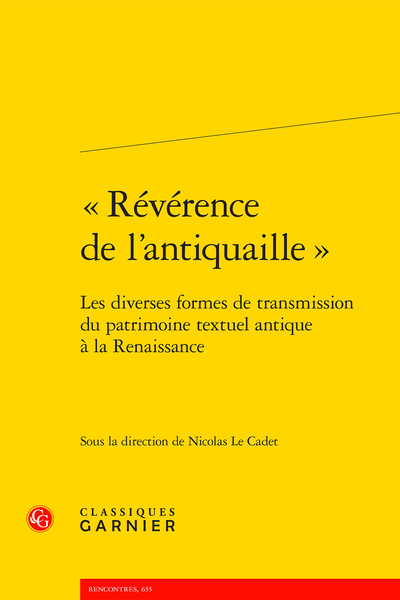
« Révérence de l’antiquaille » Les diverses formes de transmission du patrimoine textuel antique à la Renaissance - Nicolas Le Cadet (dir.)
Posted: 18 Feb 2025 - 15:40

« Révérence de l’antiquaille » Les diverses formes de transmission du patrimoine textuel antique à la Renaissance, Nicolas Le Cadet (dir.)
Placées sous le signe d’une « révérence de l’antiquaille » très ambiguë, entre respect sacré et réinvention joyeuse du legs antique, les études réunies ici explorent quelques-unes des formes diverses, souvent très créatives, que prend la transmission du patrimoine textuel antique à la Renaissance.

Sommaire disponible ici.

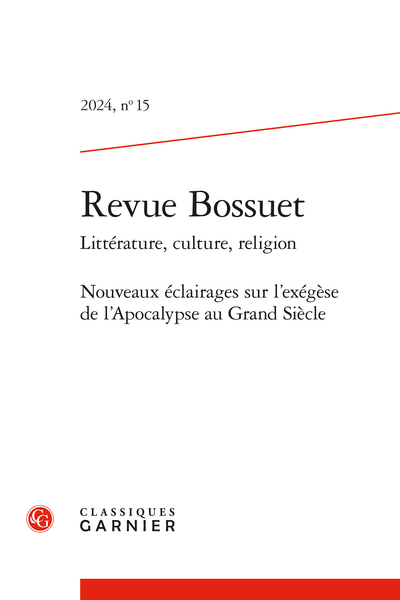
Revue Bossuet 2024, n° 15 : "Nouveaux éclairages sur l’exégèse de l’Apocalypse au Grand Siècle"
Posted: 9 Jan 2025 - 13:45

Revue Bossuet 2024, n° 15 : "Nouveaux éclairages sur l’exégèse de l’Apocalypse au Grand Siècle"

La Revue Bossuet publie des articles sur la littérature et la culture religieuse du XVIIe siècle, ainsi que des recensions d’ouvrages récents et une bibliographie annuelle.

Table des matières.

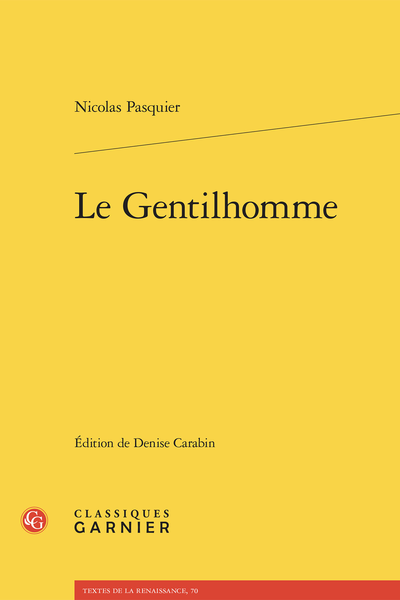
Nicolas Pasquier, Le Gentilhomme, éd. Nicole Carabin
Posted: 9 Jan 2025 - 13:42

Nicolas Pasquier, Le Gentilhomme, éd. Nicole Carabin, Paris, Classiques Garnier, (2003), 2024.
Nicolas Pasquier, juriste, philosophe et lettré, s'adresse dans ce traité à la noblesse, qu'il s'engage à former et à rendre active dans une société moderne. La présente édition analyse les sources humanistes et les lignes de force de ce discours représentatif de la littérature morale de la Régence.

Plus d'informations ici.


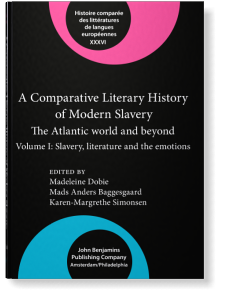
A Comparative Literary History of Modern Slavery: The Atlantic world and beyond, Volume I: Slavery, literature and the emotions
Posted: 6 Jan 2025 - 13:56

A Comparative Literary History of Modern Slavery: The Atlantic world and beyond, Volume I: Slavery, literature and the emotions, dir. Madeleine Dobie, Mads Baggegaard and Karen-Margrethe Simonsen, John Benjamins Publishing Company, 2024.
"The first volume of A Comparative Literary History of Modern Slavery explores literary representations of enslavement with a focus on the emotions. The contributors consider how the diverse emotions generated by slavery have been represented over a historical period stretching from the 16th century to the present and across regions, languages, media and genres. The seventeen chapters explore different framings of emotional life in terms of ‘sentiments’ and ‘affects’ and consider how emotions intersect with literary registers and movements such as melodrama and realism. They also examine how writers, including some formerly enslaved people, sought to activate the feelings of readers, notably in the context of abolitionism. In addition to obvious psychological responses to slavery such as fear, sorrow and anger, they explore minor-key affects such as shame, disgust and nostalgia and address the complexity of depicting love and intimacy in situations of domination. Two forthcoming volumes explore the literary history of slavery in relation to memory and to practices of authorship."

More info here.

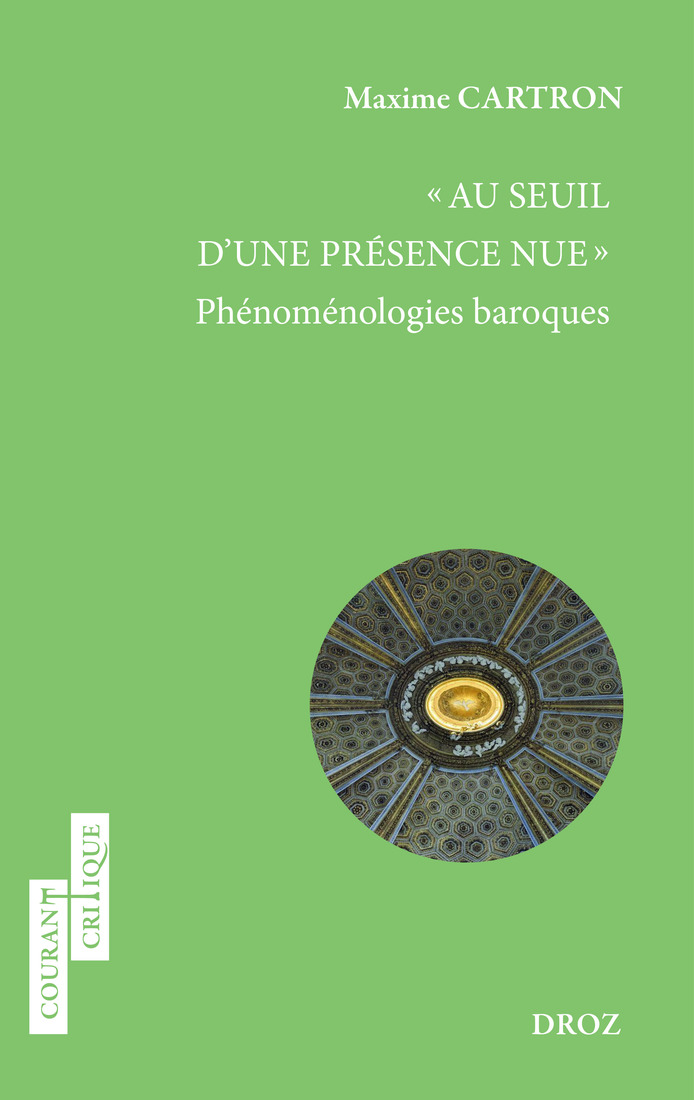
« Au seuil d'une présence nue ». Phénoménologies baroques - Maxime Cartron
Posted: 6 Jan 2025 - 13:53

Maxime Cartron, « Au seuil d'une présence nue ». Phénoménologies baroques, Genève, Sroz, 2024.

De prime abord étonnant, le rapprochement entre baroque et phénoménologie sous-tend pourtant des articulations herméneutiques singulières. Dans cet ouvrage, Maxime Cartron explore leurs enjeux esthétiques, disciplinaires et idéologiques, en démontrant que l’influence conjointe de Wölfflin et d’Ors sur Marcel Raymond et Jean Rousset a déterminé la formation d’une approche sensible du baroque. Si l’on tient aussi compte du rôle capital du compagnonnage intellectuel de ces deux professeurs genevois avec le poète Yves Bonnefoy, un continuum se tisse, qui dévoile la nature extrêmement concertée et réfléchie de la théorisation du baroque comme style phénoménologique.

Plus d'informations ici.

Conferences and Colloquia

Le 29 novembre: journée d'études "Hippolyte et La Troade de Robert Garnier"
Posted: 12 Nov 2019 - 23:08

Vendredi 29 novembre 2019

Université de la Sorbonne nouvelle-centre Censier-Amphi D 2

13 rue Santeuil, 75005 Paris


Matinée : Études critiques

9h30 : Nina Hugot (U. de Lorraine) : "O l'execrable sexe": les discours sur le genre dans Hippolyte et La Troade. 

10h : Emmanuel Buron (Rennes II CELLAM) : La sortie des Enfers. Utopie et hétérotopies de la cité dans Hippolyte et La Troade.

10h30 : discussion et pause

11h : Olivier Millet (Paris-Sorbonne CELLF) : La Grèce dans Hippolyte et La Troade.

11h30 : Jean Vignes (Paris-Diderot CERILAC) : Le dispositif choral des deux tragédies.

12h : Fabien Cherpi et Nathalie Dauvois (Sorbonne nouvelle-FIRL) : Mythe, histoire et politique dans les pièces au programme. Que sont les héros devenus ?

12h30 : discussion et pause déjeuner


Après-midi : Dramaturgie : de la théorie à la pratique

14h30 : Olivier Halévy (Sorbonne nouvelle) : Actions simultanées et dramaturgie à l'antique chez Robert Garnier.

15h15 : Mise en scène de l’acte III d’Hippolyte par la compagnie OGHMA (Charles di Meglio).

16h : Dialogue de metteurs en scène : Christian Schiaretti (TNP) et Charles di Meglio (OGHMA) : Comment jouer le théâtre humaniste ?

Invitation à un colloque en octobre : Port-Royal, littérature et cinéma (XXe-XXIe siècles)
Posted: 26 Sep 2019 - 12:13

Le prochain Colloque international de la Société des Amis de Port-Royal se tiendra du 16 au 18 octobre prochain, à Paris (Lycée Louis-Le-Grand et collège des Bernardins), sous le haut patronage de l’Institut de France et de l’Académie Française.

Entrée libre sur réservation obligatoire. 

Voir http://www.amisdeportroyal.org/societe/index.php/2019/09/25/port-royal-litterature-et-cinema-xxe-xxie-siecles/ pour le formulaire d'inscription et le programme définitif de cette manifestation.  

"Motion, Rhythm, Shifts" (Rhode Island School of Design, 5 Oct. 2019)
Posted: 13 Sep 2019 - 09:29

Hosted at the Rhode Island School of Design (RISD, pronounced: rees-dee) and in a museum for the first time, the 70th New England Renaissance Conference unfolds on October 5 with the theme of “Motion, Rhythm, Shifts.” French culture will appear in Dan Ruppel on the “Superbe et imaginaire entree faicte à la Royne Gijllette passant à Venise…” (1582), part of a vast literature of parody and propaganda vilifying King Henri III of France, and in Todd Borgerding's paper discussing erotic madrigals such as Jacques Arcadelt’s “Il bianco e dolce cigno”. Costume designs for the stage by Jean Berain (1681) are included in the special Prints and Drawings exhibition; museum tours will also discuss works from France.

Registration is free but mandatory. Registration gives you access free admission to the RISD museum, tours of the early modern collections, an engraving workshop, tempera painting demonstration, a concert “Musical Bodies in Motion” and a reception.

Please visit the NERC website for the full program and abstracts:

http://www.new-england-renaissance-conference.org/?page_id=241

Organizer: Dr. Pascale Rihouet, prihouet@risd.edu


Spectatrices! Les femmes au spectacle de l'Antiquité à nos jours, 26-28 septembre 2019
Posted: 13 Sep 2019 - 09:28

Maison de la Recherche de Paris 3 (4 rue des Irlandais, 75005 Paris)
 

JEUDI 26 SEPTEMBRE
9h Accueil des participants
9h30 Ouverture du colloque

EN QUÊTE DE SOURCES (présidence : Carlotta Sorba)
9h45-11h00
Malika BASTIN-HAMMOU (Université de Grenoble) • « Y avait-il des spectatrices dans le théâtre de Dionysos à Athènes ? Réflexions sur un débat historiographique »
Jelle KOOPMANS (Université d’Amsterdam). « Les femmes et les spectacles au Moyen Âge – du couvent à la cour »
Lise MICHEL (Université de Lausanne) • « Le point de vue féminin dans les récits de spectacles en France au xviie siècle »

Pause
 

11h15-12h15
Sophie MARCHAND (Sorbonne Université) • « Quelle visibilité pour les spectatrices dans les anecdotes dramatiques du xviiie siècle ? »
Katharine MITCHELL (University of Strathclyde) • « The fin-de-siècle Female Spectator: Methodological Approaches, Sources, and Pitfalls »

QUESTIONS D’ESPACES (présidence : Céline Frigau-Manning)
14h15-15h30
Éloïse LETELLIER-TAILLEFER (Sorbonne Université) • « Spectatum ueniunt ; ueniunt spectentur ut ipsae (Ov. ars 1, 99) ? Les femmes spectatrices dans les édifices de spectacles romains »
Carlotta SORBA (Université de Padoue) • « Entre loges et parterre : espaces et expériences des femmes dans les théâtres italiens du xixe siècle »
Robert HENKE (Washington University) • « Women Spectators of Early Modern Popular Performance: Street, Piazza, and Hall »

Pause

16h-17h30
SPECTATRICES EN ESPACES ET EN IMAGES , (Table ronde animée par Anne Surgers)
Avec Renzo GUARDENTI (Università degli Studi di Firenze) ; Véronique LOCHERT (Université de Haute-Alsace, IUF) ; Camille MURGIA (Université de Lausanne) ;
Eric NICHOLSON (New York University, Florence)
 

VENDREDI 27 SEPTEMBRE
PORTRAITS DE SPECTATRICES (présidence : Claire Lechevalier)
9h20-10h20
Paola VENTRONE (Università cattolica del Sacro Cuore, Milan) • « Une spectatrice exceptionnelle : Isabella d’Este et le théâtre italien à la Renaissance »
Hélène BOUVIER (CNRS) • « Hors scène mais pas hors-jeu, les spectatrices de la scène théâtrale madouraise »

Pause

PERFORMANCES FÉMININES (présidence : Julia Gros de Gasquet)
10h40-12h
Nathalie COUTELET (Université Paris 8) • « Sur scène et hors scène : les spectatrices des réseaux artistiques féminins au début du xxe siècle »
Bénédicte BOISSON (Université Rennes 2) • « Réception par les femmes de quelques performances féministes des années 1960-1970 – domaine français »
Florence FILIPPI (Université de Rouen) • « Mettre à l’aise toutes ces pauvres femmes :
performances d’actrices et émancipation(s) de spectatrices (1799-1900) »
 

SPECTATRICES D’UN GENRE À L’AUTRE (présidence : Alain Viala)
14h00-15h20
Clotilde THOURET (Université de Lorraine) • « Pudeur et provocation : la représentation des femmes à la comédie, en France et en Angleterre, au xviie siècle »
Judith LE BLANC (Université de Rouen) • « Spectatrices d’opéra aux xviie et xviiie siècles : représentations et realia »
Sarah NANCY (Université Sorbonne Nouvelle-Paris 3) • « Essai sur la jouissance de l’amatrice d’opéra »

Pause

15h40-17h
Marie-Claude CANOVA-GREEN (Goldsmiths, University of London) • « “Quand les spectatrices entrent dans la danse”. Masque et ballet de cour au xviie siècle »
Laura NAUDEIX (Université Rennes 2) • « Spectatrices à la cour de France au xviie siècle »
Emmanuelle DELATTRE-DESTEMBERG (Université Polytechnique Hauts-de-France)
• « Des spectatrices clandestines : les mères de danseuses à l’Opéra au xixe siècle »


18h30
LECTURE SPECTACLE - Salon de la résidence Concordia – 41 rue Tournefort - 75005 Paris. Entrée libre sur invitation
 

SAMEDI 28 SEPTEMBRE
ENJEUX POLITIQUES (présidence : Estelle Doudet)
9h15-10h35
Julia PREST (University of St Andrews) • « Entre préjugés et privilèges : les spectatrices dans les théâtres publics de Saint-Domingue »
Léonor DELAUNAY (Société d’Histoire du Théâtre) • « Mondaines et travailleuses. Les spectatrices de théâtre dans les espaces coloniaux (1850-1950) »
Stéphanie LONCLE (Université de Caen Normandie) • « Au spectacle camarades ! Analyse de la spectatrice dans les publications de l’Union des Jeunes filles de France »

Pause

SOCIOLOGIE DE LA SPECTATRICE CONTEMPORAINE
(présidence : Daniel Urrutiaguer)
11h-12h
Jean-Marc LEVERATTO (Université de Lorraine) • « La féminisation du marché des spectacles au xixe siècle et ses effets culturels »
Dominique PASQUIER (CNRS) • « Faire public entre femmes : les groupes d’amis au théâtre »

14h-16h
Y A-T-IL UN/DES PUBLIC(S) FÉMININ(S) ? LES SPECTATRICES DANS LA PROGRAMMATION ET L’ACTION CULTURELLE AUJOURD’HUI
(Table ronde animée par Aurélie Mouton-Rezzouk et Daniel Urrutiaguer)
Avec François LORIN (responsable du développement des publics au théâtre Gérard Philipe) ; Sophie GARNIER (responsable des relations publiques à la Colline) ; Éléonore BAILLY (secrétaire générale des Ateliers de Paris) ; Emmanuelle JOUAN (directrice du théâtre Louis Aragon)

Colloque en septembre: Spectatrices ! Les femmes au spectacle de l'Antiquité à nos jours
Posted: 6 Sep 2019 - 10:34

Du 26 au 28 septembre 2019 à la Maison de la Recherche de la Sorbonne Nouvelle (4, rue des Irlandais - 75005 Paris).

Plusieurs interventions "première modernité" :

JEUDI 26 SEPTEMBRE
9h Accueil des participants
9h30 Ouverture du colloque
EN QUÊTE DE SOURCES (présidence : Carlotta Sorba)
9h45-11h00
Malika BASTIN-HAMMOU (Université de Grenoble) • « Y avait-il des spectatrices dans le théâtre de Dionysos à Athènes ? Réflexions sur un débat historiographique »
Jelle KOOPMANS (Université d’Amsterdam). « Les femmes et les spectacles au Moyen Âge – du couvent à la cour »
Lise MICHEL (Université de Lausanne) • « Le point de vue féminin dans les récits de spectacles en France au xviie siècle »
Pause
11h15-12h15
Sophie MARCHAND (Sorbonne Université) • « Quelle visibilité pour les spectatrices dans les anecdotes dramatiques du xviiie siècle ? »
Katharine MITCHELL (University of Strathclyde) • « The fin-de-siècle Female Spectator: Methodological Approaches, Sources, and Pitfalls »
QUESTIONS D’ESPACES (présidence : Céline Frigau-Manning)
14h15-15h30
Éloïse LETELLIER-TAILLEFER (Sorbonne Université) • « Spectatum ueniunt ; ueniunt spectentur ut ipsae (Ov. ars 1, 99) ? Les femmes spectatrices dans les édifices de spectacles romains »
Carlotta SORBA (Université de Padoue) • « Entre loges et parterre : espaces et expériences des femmes dans les théâtres italiens du xixe siècle »
Robert HENKE (Washington University) • « Women Spectators of Early Modern Popular Performance: Street, Piazza, and Hall »
Pause
16h-17h30
SPECTATRICES EN ESPACES ET EN IMAGES , (Table ronde animée par Anne Surgers)
Avec Renzo GUARDENTI (Università degli Studi di Firenze) ; Véronique LOCHERT (Université de Haute-Alsace, IUF) ; Camille MURGIA (Université de Lausanne) ;
Eric NICHOLSON (New York University, Florence)


VENDREDI 27 SEPTEMBRE
PORTRAITS DE SPECTATRICES (présidence : Claire Lechevalier)
9h20-10h20
Paola VENTRONE (Università cattolica del Sacro Cuore, Milan) • « Une spectatrice exceptionnelle : Isabella d’Este et le théâtre italien à la Renaissance »
Hélène BOUVIER (CNRS) • « Hors scène mais pas hors-jeu, les spectatrices de la scène théâtrale madouraise »
Pause
PERFORMANCES FÉMININES (présidence : Julia Gros de Gasquet)
10h40-12h
Nathalie COUTELET (Université Paris 8) • « Sur scène et hors scène : les spectatrices des réseaux artistiques féminins au début du xxe siècle »
Bénédicte BOISSON (Université Rennes 2) • « Réception par les femmes de quelques performances féministes des années 1960-1970 – domaine français »
Florence FILIPPI (Université de Rouen) • « Mettre à l’aise toutes ces pauvres femmes :
performances d’actrices et émancipation(s) de spectatrices (1799-1900) »
SPECTATRICES D’UN GENRE À L’AUTRE (présidence : Alain Viala)
14h00-15h20
Clotilde THOURET (Université de Lorraine) • « Pudeur et provocation : la représentation des femmes à la comédie, en France et en Angleterre, au xviie siècle »
Judith LE BLANC (Université de Rouen) • « Spectatrices d’opéra aux xviie et xviiie siècles : représentations et realia »
Sarah NANCY (Université Sorbonne Nouvelle-Paris 3) • « Essai sur la jouissance de l’amatrice d’opéra »
Pause
15h40-17h
Marie-Claude CANOVA-GREEN (Goldsmiths, University of London) • « “Quand les spectatrices entrent dans la danse”. Masque et ballet de cour au xviie siècle »
Laura NAUDEIX (Université Rennes 2) • « Spectatrices à la cour de France au xviie siècle »
Emmanuelle DELATTRE-DESTEMBERG (Université Polytechnique Hauts-de-France)
• « Des spectatrices clandestines : les mères de danseuses à l’Opéra au xixe siècle »
18h30
LECTURE SPECTACLE - Salon de la résidence Concordia – 41 rue Tournefort - 75005 Paris. Entrée libre sur invitation


SAMEDI 28 SEPTEMBRE
ENJEUX POLITIQUES (présidence : Estelle Doudet)
9h15-10h35
Julia PREST (University of St Andrews) • « Entre préjugés et privilèges : les spectatrices dans les théâtres publics de Saint-Domingue »
Léonor DELAUNAY (Société d’Histoire du Théâtre) • « Mondaines et travailleuses. Les spectatrices de théâtre dans les espaces coloniaux (1850-1950) »
Stéphanie LONCLE (Université de Caen Normandie) • « Au spectacle camarades ! Analyse de la spectatrice dans les publications de l’Union des Jeunes filles de France »
Pause
SOCIOLOGIE DE LA SPECTATRICE CONTEMPORAINE
(présidence : Daniel Urrutiaguer)
11h-12h
Jean-Marc LEVERATTO (Université de Lorraine) • « La féminisation du marché des spectacles au xixe siècle et ses effets culturels »
Dominique PASQUIER (CNRS) • « Faire public entre femmes : les groupes d’amis au théâtre »
14h-16h
Y A-T-IL UN/DES PUBLIC(S) FÉMININ(S) ? LES SPECTATRICES DANS LA PROGRAMMATION ET L’ACTION CULTURELLE AUJOURD’HUI
(Table ronde animée par Aurélie Mouton-Rezzouk et Daniel Urrutiaguer)
Avec François LORIN (responsable du développement des publics au théâtre Gérard Philipe) ; Sophie GARNIER (responsable des relations publiques à la Colline) ; Éléonore BAILLY (secrétaire générale des Ateliers de Paris) ; Emmanuelle JOUAN (directrice du théâtre Louis Aragon


Member News Briefs

promotion and publications

Please join me to congratulate Sylvaine Guyot for her recent achievements:

-She was promoted Associate Professor at Harvard University

-She is currently Visiting Professor at Columbia University

-She recently published 2 books on Racine (see the Publication tab): Racine et le Corps Tragique (PUF, 2014); an edition on Racine's theater with Alain Viala (Garnier, 2014)

Post date: 11 years 8 months ago
promotion

Please join me to congratulate Charlotte Trinquet du Lys who got tenure at University of Central Florida!

Post date: 11 years 8 months ago
Dr
University of New England (Australia)

Bernard Bourque's book Jean Donneau de Visé et la querelle de Sophonisbe. Écirts contre l'abbé d'Aubignac was published in June 2014 by Narr Verlag in the Biblio 17 series [ISBN: 978-3-8233-6894-6].

The book is the first critical edition of the three Défenses by Donneau de Visé (Défense de la Sophonisbe, Défense du Sertorius and Défense d’Œdipe) in which the author defends Pierre Corneille against the four Dissertations of abbé d’Aubignac. The largely unknown Défense d’Œdipe has never before appeared in print since the original publication.


Post date: 11 years 11 months ago
  • <<<
  • 18 of 18
  •