



Announce

Calls for Papers and Contributions

Appel à contributions: L’imaginaire de la forêt (Artis Natura, vol. 1, n° 2)
Posted: Sunday, June 4, 2017 - 11:29

L’imaginaire de la forêt – Artis Natura, vol. 1, n° 2 – Printemps/Été 2017

Le comité éditorial d’Artis Natura est à la recherche de contributions à sa plateforme collaborative culturelle en ligne. Le projet Artis Natura a pris la forme d’un blogue où les chercheurs, artistes, et écrivains peuvent partager leurs réflexions sur le thème de l’influence réciproque de l’humain sur la nature.

Ce second numéro s’intéresse à l’univers sylvestre et à ses représentations. La forêt s’est inscrite comme espace en tension entre le réel et l’imaginaire collectif, phénomène qui transparait dans la diversité de ses représentations. Les contributions de différents horizons sont les bienvenues :  Notre approche n’est pas uniquement académique, et a pour ambition de regrouper articles, créations artistiques et littéraires abordant une thématique commune.

Nous vous proposons une liste non-exhaustive d’axes de réflexions potentiels :

  • L’imaginaire de la forêt : la forêt dans les contes et les fables, la forêt dans la religion, la notion de wilderness… 
  • Le rapport forêt/humain : le patrimoine, la forêt comme danger, perspectives autochtones…
  • La forêt comme espace : la lisière de la forêt, le parc, la biodiversité, la forêt comme lieu habitable…
  • Les cycles de la forêt : régénération, les saisons de la forêt, les feux de forêt…
  • La forêt comme ressource naturelle : exploitation forestière, durabilité, forêts protégées ou en danger…

Le projet est bilingue, en français et en anglais, et les contributions dans les deux langues sont acceptées. Les réflexions, entre 1 et 2 pages Word, sont publiées au fur et à mesure de leur soumission. Toute contribution doit être envoyée à l’adresse artisnaturacontact@gmail.com entre le 1er juin et le 31 octobre 2017 et accompagnée d’une courte biographie et d’une photographie de profil. Les contributions répondant à cet appel seront reliées ultérieurement dans une publication papier.

Vous pouvez visiter le site à l’adresse suivante : www.artisnatura.com
 
Source: Fabula
Call for articles: "Wearing Images"
Posted: Sunday, June 4, 2017 - 10:47

We invite all members of the academic community to submit original manuscripts for the sixth issue of Espacio, Tiempo y Forma. Serie VII. Historia del Arte, New Era. Submissions in English, Spanish and French are welcome for the themed dossier. The deadline for submissions is December 1, 2017.

THEMED DOSSIER: "Wearing Images" by Diane Bodart

"Wearing Images" is the title of the themed volume for the sixth issue of the journal that has recently entered a New Era. It will be guest-edited by Diane Bodart, David Rosand Assistant Professor of Italian Renaissance Art History at Columbia University of New York, who has proposed the following thematic framework for this special issue:

In the past decades, studies on the materiality and the efficacy of images, as well as the artistic and social practices related to them, have allowed scholars to explore how much images' making, use, handling, and display contributed to the activation of their powers of presence through their interaction with the viewer. Further, the growing interest in the articulation between the history of art and the anthropology of images has brought to light the close links between the art object and the body: in fact, if the body can be the medium of the animate art object, the art object can potentially act as a substitute of the animate body. But what happens when the body is not the medium but the support of a distinctive image, when it inscribes an image on its own surface, whether directly on the skin or through intermediary props such as clothing or corporeal parure?

Wearing Images aims to investigate the different modes of interaction between the image and the body that wears it in the Early-Modern period (between ca. 1400–1800), when devotional, political, dynastic, or familial images could be worn as medals, jewels, badges, embroidered garments, or tattoos. During processions or public rituals, images could be carried in close contact with the body, as if they were part of it. Sometimes, the body could be entirely wrapped with images and transformed by them, for example through the adornment of armor or carnival costumes.

The volume will address issues such as: the role of images worn on the body in the definition of identity, in the affirmation of group affiliation, and in the construction of the self; the apotropaic dimension and empowering effect created by the contact between the body and the image; the performativity of wearing images on the body in motion and the interaction that it engages between the image-bearer and the image-viewer. Attention will also be devoted to the depiction of the image-bearer, which introduces a potential structure en abyme into the pictorial composition through the inscription of an image within an image.

The volume Wearing Images will consider original papers that investigate the act of inscribing and carrying images on the body in the Early-Modern period, through mediums such as tattoos, jewels, badges, garments, armor, or shields. Contributions discussing the representation of images bearers in works of art are also encouraged. Papers can focus on a particular example or analyze a group of objects. There are no geographic restrictions for the volume, and while the chronology mainly concerns the Early-Modern period, comparative analyses with other periods are also welcome. Please circulate this Call for Papers widely.

Once you have registered and consulted the submission guidelines, please send your proposal on our online journal platform: http://revistas.uned.es/index.php/ETFVII/index http://revistas.uned.es/index.php/ETFVII/about/submissions

If you have any enquiries, please contact the journal editor, Inmaculada Vivas, serie7.revista-etf@geo.uned.es; for queries regarding the e-platform, contact Jesús López revista-etf@geo.uned.es.

Kind regards,

Inmaculada Vivas Journal Editor

CFP: 21st Biennial New College Conference on Medieval & Renaissance Studies
Posted: Sunday, June 4, 2017 - 10:44

The twenty-first biennial New College Conference on Medieval & Renaissance Studies will take place 8–10 March 2018 in Sarasota, Florida. The program committee invites 250-word abstracts of proposed twenty-minute papers on topics in European and Mediterranean history, literature, art, music and religion from the fourth to the seventeenth centuries. Interdisciplinary work is particularly appropriate to the conference’s broad historical and disciplinary scope. Planned sessions are also welcome.

The deadline for all abstracts is 15 September 2017; for submission guidelines or to submit an abstract, please go to http://www.newcollegeconference.org/cfp.

Junior scholars whose abstracts are accepted are encouraged to submit their papers for consideration for the Snyder Prize (named in honor of conference founder Lee Snyder), which carries an honorarium of $400. Further details are available at the conference website.

The Conference is held on the campus of New College of Florida, the honors college of the Florida state system. The college, located on Sarasota Bay, is adjacent to the John and Mable Ringling Museum of Art, which will offer tours arranged for conference participants. Sarasota is noted for its beautiful public beaches, theater, food, art and music. Average temperatures in March are a pleasant high of 77F (25C) and a low of 57F (14C).

More information will be posted on the conference website (http://www.newcollegeconference.org) as it becomes available, including plenary speakers, conference events, and area attractions. Please send any inquiries to info@newcollegeconference.org.

Source: RSA

CFP: 2017 New England Renaissance Conference: Deceit, Deception, and Dishonesty in the Early Modern Era
Posted: Sunday, June 4, 2017 - 10:42

Saturday, October 21, 2017 at University of Massachusetts, Boston

Proposals due June 9, 2017

In The Prince (1513), Machiavelli advised that in politics it is better to seem than to be. Venetian statesman Fra Paolo Sarpi, wary of his stance against the Roman church, confided that “I never speak falsehoods, but I do not tell the truth to everyone.” Similarly, Torquato Accetto, secretary to the dukes of Naples, noted in Della dissimulazione onesta (1641) that it was possible “to give truth a small rest” without, however, resorting to untruths.

Where is the boundary between acceptable—or desirable—deception, and that which is unacceptable? How does this negotiation manifest itself across different situations, mediums, and modes of expression? What does the 21st century have to learn from understanding the notions of deceit and dishonesty of the early modern era, whether in the arts or in politics? The conference welcomes papers presenting original research on a broad range of areas related to this topic across a variety of national traditions.

Paper topics might address, but are not limited to, the following:

  • Artistic and literary forgeries
  • Counterfeit currency and materials
  • Plagiarism and imitation in the arts and letters
  • Iconography, personification, or allegorical representation of concepts such as Truth, Falsehood, Calumny, Deceit in the arts and literature
  • Illusionism, fantasy, and invention in the visual arts and in literature
  • Narratives of idealized pasts or golden ages, and the construction, omission, or falsification of local or national histories

We encourage the submission of individual papers, as well as of assembled panels, especially those of an interdisciplinary nature.

For individual papers: please send 300-word (max) abstract and CV.

For assembled panels: please send panel title as well as abstract and CV for each participant.

Lorenzo Buonanno, lorenzo.buonanno@umb.edu and Shannon McHugh, shannon.mchugh@umb.edu

Submissions must be received by: June 9, 2017

CFP: Imagining the Body in France & the Francophone World
Posted: Friday, May 26, 2017 - 00:24

Date: 19th and 20th January 2018

Venue: University of Birmingham, UK

Proposals due: 1 June 2017

Confirmed keynote speakers: Dr. Kate Averis & Professor Lisa Downing Invited artists: Fiorenza Menini & Dr. Jacqueline Taylor  Organisers: Antonia Wimbush, Polly Galis and Maria Tomlinson Blog: https://imaginingthebody.wordpress.com/ Twitter: @imaginingbody

The notion of ‘imagining the body’ problematises the possibility of representing the body as it is en soi - whether it be depicted textually, visually or orally –, which has remained a matter of conjecture amongst scholars within creative and theoretical fields alike. Interpretations of bodily identity and development have proved equally conflicted, and the vision of a shared bodily experience has generated both comfort and controversy, particularly amongst feminists and within the queer community. What exactly do we mean by the body and how do we represent it? Is there a commonality of bodily experience?

The body in all its complexity has fascinated and inspired artists, writers, filmmakers, journalists and philosophers for centuries, and is foundational to the French and Francophone aesthetic regime. This two-day bilingual, cross-cultural and interdisciplinary conference aims to bring together academics and postgraduate researchers working on representations of the body from both French and Francophone studies, in a wide range of disciplines, historical periods, and critical approaches. The purpose of the conference is to facilitate dialogue, debate, and exchange about why it is important to study the body in French and Francophone studies. This conference seeks to question how portrayals and conceptions of the body are influenced by and come to influence global, social phenomena (such as culture, politics, geography, socio-economics, law and medicine), and above all, how French and Francophone creative practice and theory shapes our understanding of the body.

The following is an indicative, but by no means exhaustive, list of the kinds of issues we hope to address:

  • Gender and/or sexuality and the body (the female body, the male body, the transgender body etc.)
  • The maternal body
  • The ageing body
  • Violence and abuse of the body
  • The body in movement/stasis or in situ
  • The body in exile
  • The body and society
  • Animal bodies
  • More ‘abstract’ definitions of the body (such as a body of water or a body of literature) will also be considered

Please send abstracts of no more than 300 words, with your name, institutional affiliation, short biography and contact details (excluded from word count), by 1st June 2017 to Antonia, Polly, and Maria using the email address imaginingthebody@gmail.com. Papers in both English and French will be welcome and should be no longer than 20 minutes.

Organised with the generous support of the Institute of Modern Languages Research and the Society for French Studies


New Publications

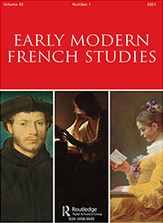
Early Modern French Studies, 43. 1 (2021) : "Women Philosophers in Early Modern France"
Posted: 26 Aug 2021 - 08:24

 Early Modern French Studies, 43. 1 (2021) : "Women Philosophers in Early Modern France", Derval Conroy ed.
Available online

Table of Contents:

Introduction: Women and the History of Philosophy
Derval Conroy

1.     'Le bien sur le bord du mal': la philosophie morale de Marie de Gournay
Marie-Frédérique Pellegrin, Université Jean Moulin-Lyon 3

2.     Against Uniformity: Gournay's Philosophy of Language and Literature
John J. Conley, Loyola University Maryland

3.     Suzanne de Nervèze polygraphe: les modulations du discours moral dans les Pensées chrestiennes et morales(1662)
Jean-Philippe Beaulieu, Université de Montréa

4.     Society and Sociability in Gabrielle Suchon: Towards a Politics of Friendship
Derval Conroy, University College Dublin

5.     The Paradoxes of Religion in Gabrielle Suchon
Véronique Desnain, University of Edinburgh

6.     'Réformez vos contrats!': From the Marriage Contract to the Social Contract in Louise Dupin and Jean-Jacques Rousseau
Rebecca Wilkin, Pacific Lutheran University

7.     Louise Keralio-Robert: Feminism, Virtue, and the Problem of Fanaticism
Karen Green, University of Melbourne


L’autorité d’un canon philosophique. Le cas Descartes (Delphine Antoine-Mahut)
Posted: 26 Aug 2021 - 08:18

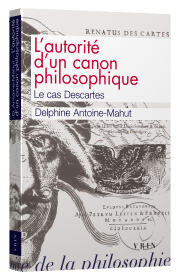
Delphine Antoine-Mahut, L’autorité d’un canon philosophique. Le cas Descartes, Paris, Vrin, 2021.
Les Humanités sont entrées dans une période critique contestant l’autorité du petit nombre de modèles du passé ayant leur place dans un canon. Au nom de quoi? De la reconnaissance de la diversité des expériences et de son rôle fondamental dans la formation des citoyens. Mais ce faisant, on oublie parfois que le canon est, aussi, le produit épuré et pacifié de différentes autres interprétations possibles d’une doctrine philosophique. Pour le montrer, Descartes est un cas paradigmatique. En déplaçant la question du droit d’entrée dans le canon, vers celle de la généalogie d’une carte d’identité, cet ouvrage explique le lien entre les premiers autoportraits polémiques de Descartes et sa postérité qui en fait un label : le “dualisme de Descartes”.

Disponible sur le site de l'éditeur.

Vrin - Bibliothèque d’Histoire de la Philosophie – Poche
356 pages - 11 × 18 cm
ISBN 978-2-7116-3020-2 - août 2021

Jean Passerat, Œuvres poétiques françaises (éd. François Rouget)
Posted: 26 Aug 2021 - 08:13

Jean Passerat, Œuvres poétiques françaises, éd. François Rouget, Paris, Classiques Garnier, 2021.
La présente édition critique reproduit le Recueil des œuvres poétiques de Jean Passerat (1534-1602), Lecteur en éloquence au collège Royal, contemporain de Ronsard et de Desportes, connu pour sa participation à la Satyre Ménippée. Elle est complétée de nombreux vers qui étaient demeurés inédits.

Sommaire disponible sur le site de l'éditeur.

Nombre de pages: 655
Parution: 23/06/2021
Collection: Textes de la Renaissance, n° 238
Série: Scriptorium, n° 5
ISBN: 978-2-406-11067-5
ISSN: 1262-2842

De Port-Royal au jansénisme à travers les Relations de captivité (Michèle Bretz)
Posted: 26 Aug 2021 - 08:10

Michèle Bretz, De Port-Royal au jansénisme à travers les Relations de captivité, préface de Gilbert Schrenck, Paris, Classiques Garnier, 2021.
Les religieuses de Port-Royal décrivent leur révolte contre la signature du formulaire dans leurs Relations de captivité, des journaux de prison, écrits à la fois intimes et collectifs. Les jansénistes du dix-huitième siècle en firent un mythe. Cet ouvrage en analyse la dynamique.

Sommaire disponible sur le site de l'éditeur.

Nombre de pages: 295
Parution: 23/06/2021
Collection: Univers Port-Royal, n° 45
ISBN: 978-2-406-11447-5
ISSN: 1636-7332

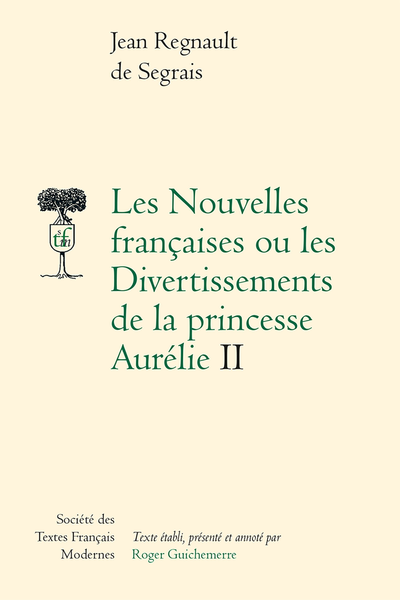
Jean Regnault de Segrais, Les Nouvelles françaises ou les Divertissements de la princesse Aurélie. II (éd. Roger Guichemerre)
Posted: 26 Aug 2021 - 08:07

Jean Regnault de Segrais, Les Nouvelles françaises ou les Divertissements de la princesse Aurélie. II, éd. Roger Guichemerre, Paris, STFM, 2021.

À côté des grands noms de la littérature (Ronsard, Corneille, Voltaire ou Chateaubriand) et des œuvres majeures, des collections (Du Bellay, Rotrou, Saint-Evremond, Scarron, Tristan l'Hermite), des auteurs moins connus (Angot de l'Eperonnière, Boindin ou Mareschal) et de nombreux textes rares, souvent en première édition moderne, les textes publiés par la STFM offrent le panorama le plus riche et le plus varié de la littérature française de la Renaissance à l'époque moderne.

Sommaire disponible sur le site de l'éditeur.

Nombre de pages: 275
Parution: 04/08/2021
Collection: Société des Textes Français Modernes, n° 197
ISBN: 978-2-86503-338-6
ISSN: 0768-0821