Announce

Calls for Papers and Contributions

CfP: Graduate Student Conference in French at University of Arizona
Posted: Thursday, August 29, 2019 - 13:22

February 28-29 2020

The Department of French & Italian at the University of Arizona is delighted to invite MA and PhD students to submit one of the following:

an abstract for an oral presentation (20 minutes + 10 minutes for questions/comments)

a  poster for work in progress  

The oral presentation and poster may be a research paper written for a graduate class or it may be part of a thesis or dissertation in one or more of the following areas:

Theoretical and applied linguistics

First, second language acquisition

Teaching French as a second/foreign language

Digital technologies (and pedagogy)

French and Francophone literature, culture and civilization 

French and/or Francophone cinema

Women’s studies, queer studies and sexuality


We are also inviting students in visual arts to submit their original work related to French and/or Francophone culture in photography, painting, drawing or short films. The selected submissions will be exhibited during the conference and on our website. 

We are pleased to present two plenary speakers:

Dr. Sébastien Dubreil, Teaching Professor of French and Francophone Studies, Second Language Acquisition, and Technology-Enhanced Learning at Carnegie Mellon University

Dr. Moradewun Adejunmobi,Professor of African American and African Studies at University of California, Davis

Participants will be able to attend a workshop on Digital Humanities led by Dr. Bryan Carter, Associate Professor of Africana Studies and Director of the Center for Digital Humanitiesat the University of Arizona. 

 Considering digital humanities as a part of your professional portfolio

As seen by the rise in digital humanities conferences presentations workshops and publications, the digital humanities should be considered as an important addition to the professional portfolio of any new or rising academic. This workshop will offer ideas on how to get started in the digital humanities and a few examples of existing projects.

Submit your abstract by November 15, 2019 here: https://2ndazconference.sciencesconf.org/index/unauthorized


CfP: ASECS 2020 panel, Women and the Institutions of Knowledge
Posted: Thursday, August 29, 2019 - 13:17

Women contributed extensively to the production of knowledge in the eighteenth century, without however always receiving credit for their intellectual and scientific practices. Largely excluded from the ranks of universities and academies, women fashioned alternative practices and found other venues in the margins of the institutions of knowledge. Their participation in intellectual life took multiple forms: by participating in correspondence networks, by influencing and facilitating the election of new academy members, by participating in competitions anonymously, or simply by publishing their work. Others were patrons, hosted salons, wrote memoirs, attended public lessons and sessions, etc. This panel seeks to re-evaluate women's relationships to multiple forms of knowledge production in eighteenth- century Europe.

Please send a 200-word abstract to Julie Candler Hayes (jhayes@hfa.umass.edu) and Sarah Benharrech (sbenharr@umd.edu) by September 15th 2019.

https://www.asecs.org/asecs-2020

CfP: Borders and Crossings Travel Writing Conference Sydney 2020
Posted: Friday, August 23, 2019 - 11:06

17th Borders and Crossings Travel Writing conference

University of Sydney, Australia 20-23 July 2020

Conference theme: ‘Travelling differently’

Conference background

The first of the ‘Borders and Crossings’ conferences, a series devoted to the international, interdisciplinary study of travel writing, was organised by Glenn Hooper and Tim Youngs, and held at Magee College, Derry in 1998. Travel literature was at that time far from mainstream as an area of academic research, but the intervening two decades have witnessed a major shift in attitudes towards the genre, with the emergence of dedicated journals, scholarly associations and other academic apparatus associated with the building of a new field. ‘Borders and Crossings’ has played a catalytic role in these processes as it has provided a forum for scholars across a range of disciplines and from a wide variety of national contexts to meet regularly, to explore an increasingly rich corpus of travel writing, and to debate its centrality to the Arts, Humanities and Social Sciences.

In 2020, the Borders and Crossings conference will come to Australia for the second time (the first was at the University of Melbourne in 2008), and will have as its core theme the idea of differences and diversity in means and experiences of travel.

Call for papers: ‘Travelling differently’

The 2020 conference will take part in a unique context: that of a postcolonial yet white-western dominated member of the ‘Anglosphere’, situated in a South-East Asian and Pacific Island geographical, economic and political context. Contemporary Australia, and its founding settlement of Sydney, epitomise borders and crossings. It is founded on different types of travel: forced and chosen, tourism and exile, appropriation and return, movement of ideas and cultures, movement of species and their shifting environments. We thus invite conference participants to reflect on the theme of ‘travelling differently’. Subthemes can include but are not limited to 

-          Redefining regions: How have borders changed or are they changing? What makes them more or less porous? What factors impact on who is ‘in’ and who is ‘out’?

-          North-north and south-south interactions: Much of our world has been shaped by north-south interactions, but north-north interactions continue to dominate the global cultural conversation at the same time as south-south interactions are emerging as new vehicles for political and cultural exchange.

-          Ideas travelling: how do contemporary shifts in political, economic and cultural power impact on the ways in which ideas travel?

-          Travelling minorities: in countries like Australia, Indigenous people have travelled lands and continents for millennia, but modern societies create new challenges: those of displacement and ‘exile within’. Other racialised minorities, and indeed women and LGBTI populations, also face different challenges in travelling, whether material (personal safety, less access to the means to travel), psychological, cultural or symbolic. 

-          Animals travelling: a country like Australia is well-placed to know how the transport of animals around the globe has impacted on ecosystems, cultures and economies in our Anthropocene age. How do animals feature in travel writing? What symbolic roles do they play?

-          Forced travelling: asylum seekers, Indigenous peoples, and all others displaced due to a range of natural and human-made catastrophes experience travel differently from those who have a choice in the matter. How is their experience documented and imagined?

-          Travelling objects: Humans are collectors—whether purchasers or plunderers—and transporters of things. What do ‘travelling objects’ come to symbolise in the ways we talk and write about travel? 

-          Repatriation: Travellers—whether human or inanimate, whether exiled or ‘born displaced’, whether in times of war or times of peace—also experience return, in life and after death. What is the place of repatriation in our cultural narratives?

-          Travelling words: Languages also travel the globe, often becoming means of literary expression as second or third languages of the writers. Words also travel through translation, or travel from orality to page as written forms are developed for traditional languages. How does the language of expression impact on the ways in which we write and read about travel?

-          Travelling images: Our artistic traditions, from visual arts through to performance and cinema, have developed rich hybridities through the travel of styles and models from one culture to another. 

-          Virtual travel & proxy travel: in our internet-facilitated age, virtual travel is a reality for many, not only vicarious tourism but also the virtual transnational workplace.

-          Imagined universes: stories of travel lie at the core of science-fiction and fantasy writing. Indeed, one cannot imagine other universes without travelling to them.

-          Philanthropic travelling: our age has seen an explosion of philanthropic travel, and documentation thereof, whether through a growing body of testimony by volunteers working for NGOs or through the ubiquitous imagery of philanthrocapitalists travelling the Third World.  When one is ‘travelling for others’, how does the narrative of travel change?

Diseases travelling:  From the plague to cholera to AIDS to H1N1 (the virus that caused the pandemics of Spanish flu in 2018-2019 and swine flu in 2009) to Ebola, the world has experienced its share of pandemics. Travelling diseases become imbricated with the history of peoples, cultures, nations, and have often played central roles in travel writing, whether testimonial or fictional. 

Teaching travel writing: why, and how, does one ‘teach’ travel writing? What roles does travel writing play in our curricula, whether in literature, foreign languages, area studies, international studies or history?

Deadline for submission of abstracts: 1 March 2020.

For all enquiries contact Conference Convenor Bronwyn Winter: bronwyn.winter@sydney.edu.au

CfP: ASECS 2020 panel, “Too political, too big, no good”: picturing politics in the long eighteenth century
Posted: Friday, August 23, 2019 - 11:01

AMERICAN SOCIETY FOR EIGHTEENTH-CENTURY STUDIES (ASECS) 2020 panel.

Abstracts to Jessica L. Fripp, Assistant Professor of Art History, TCU (j.fripp@tcu.edu) before sept 16.

“Too political, too big, no good”: picturing politics in the long eighteenth century

“Too political, too big, no good” were the words Kim Sajet, director of the Smithsonian’s National Portrait Gallery, reportedly used to turn down Julian Raven’s gift of his propagandistic/fan-art portrait of Donald Trump, Unafraid and Unashamed. Inspired by this amusing, if somewhat absurd, event, this panel seeks papers that address political art in the long eighteenth century (1660-1830) that was celebrated at the time but is now maligned, or vice versa. Topics might include: official commissions celebrating events that have fallen out of favor due to changing understandings of histories of power (for example, colonial or imperialistic endeavors); works that have been positively or negatively affected by the vagaries of taste for a style or an artist; works taken up independently by artists that were well-received or rejected; or works that demonstrate the conflict between the needs of a political regime and the public. What did it mean for a work of art to be “too political,” “too big,” or “no good” in the eighteenth century? What impact do these value judgments have on our understanding of political art, then and now?  


CfP: Beyond 'Jewish-Muslim Relations'?
Posted: Friday, August 23, 2019 - 10:51

May 19-20, 2020, University of Manchester 

Proposals: December 1, 2019

Keynote Speakers: Najwa al-Qattan (Loyola Marymount University), Seth Anziska (University College London), Yulia Egorova (Durham University), and Brian Klug (Oxford University)

Call for Papers

Beyond ‘Jewish-Muslim Relations’ invites scholars of Jewish and Muslim histories, cultures, politics, theologies and peoples to share comparative, transnational, and interdisciplinary approaches to the study of these topics as they relate to and come into contact with one another. Despite many theological and cultural similarities and frequent social proximity between Jews and Muslims, Jewish-Muslim relations in both contemporary societies and in diverse historical and geographic settings are often depicted in polarized binary terms. This conference aims to understand interactions and relations between Jews and Muslims in a wide variety of contexts beyond this binary. We encourage papers which offer innovative theoretical, methodological and empirical contributions to the study of these topics, and in particular seek papers which adopt a critical approach to the terminology of ‘Jewish-Muslim relations,’ which might itself inadvertently invoke binary, possibly predetermined relations between Jews and Muslims qua Jews and Muslims, often within historical and socio-political frameworks that have reified categories of Jews, Muslims, and inter-ethnic/-religious relations.

We welcome papers on topics including, but not limited to:

·         Historical cases of interaction between Jews and Muslims

·         Representations and self-representations of Jews and Muslims

·         Jewish and Muslim interfaith activism/dialogue

·         Religion, tradition, secularism and innovation

·         Antisemitism and Islamophobia

·         Islamic and Jewish polemic and intellectual cross-fertilisation

·         Critical theory and Jewish-Muslim relations

·         Gender and sexuality

·         Jews and Muslims in the arts, literature and media

·         Multilingualism, translation and transnationalism

Paper proposals should include abstracts of 250 words and a speaker biography of no more than 100 words. Speakers are allocated 20 minutes to present and 10 minutes for questions and discussion. Please address all proposals and queries to the organizers (Adi Bharat and Katharine Halls) at jewish.muslim@manchester.ac.uk

Deadline for submissions: December 1, 2019


New Publications

Larry F. Norman, Sous le choc de l'antique
Posted: 1 Oct 2022 - 00:28

Larry F. Norman, Sous le choc de l'antique, Paris, Éditions Hermann, coll. "Échanges littéraires ", 2022
La dite « Querelle des Anciens et des Modernes », une des controverses les plus médiatisées de la première modernité en Europe, a souvent été caricaturée comme opposant des réactionnaires épris d’Antiquité et de courageux pourfendeurs des autorités culturelles établies. Sous le choc de l’antique renverse cette vision en montrant comment les défenseurs de la littérature grecque classique, loin de se raccrocher à une tradition désuète, célèbrent en fait dans le monde antique une radicale altérité, peu compatible avec les normes de la bienséance et la culture de cour en vigueur sous l’absolutisme français. Ce qui choque et fait scandale dans les œuvres d’une époque reculée se trouve ainsi retourné en modèle esthétique, venant à la fois nourrir les tensions et contradictions du « classicisme » et préparer la voie aux philosophies novatrices des Lumières.

Contribution majeure à l’étude des débats littéraires et culturels de la première modernité, le livre de Larry F. Norman frappera également le lecteur non spécialiste par le caractère très contemporain de ses enjeux.

EAN : 9791037021007
346 pages
Prix : 26 EUR
Date de publication : 07 Septembre 2022

Plus d'informations ici.


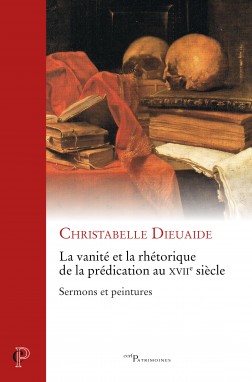
Ch. Dieuaide, La vanité et la rhétorique de la prédication au XVIIe siècle
Posted: 1 Oct 2022 - 00:26

Ch. Dieuaide, La vanité et la rhétorique de la prédication au XVIIe siècle, Paris, Editions du Cerf, coll. "Cerf Patrimoines", 2022.

Signe de la place importante occupée par la prédication dans la vie sociale et religieuse au XVIIe siècle, catholiques et protestants se pressent dans les églises et dans les temples pour écouter leurs pasteurs respectifs prêcher la vanité du monde. Il se trouve que c’est aussi au début de ce siècle qu’un genre pictural, qui ne dit pas encore son nom – la Vanité –, apparaît, associant à un réalisme saisissant un langage symbolique puissant qui ne manque pas de faire écho aux sermons des prédicateurs. L’époque est donc celle d’une pastorale de la vanité qui, loin d’être usée (le topos est ancien), ou asséchante (ne s’agit-il pas de dire le rien ?), se révèle être, bien au contraire, la force motrice d’une rhétorique renouvelée.

Agrégée de lettres modernes et docteure en littérature française, Christabelle Dieuaide, qui enseigne en Corrèze, travaille sur la prédication, notamment protestante, au XVIIe siècle.

Plus d'informations ici.


L. Piettre, L'ombre de Guillaume Du Bellay sur la pensée historique de la Renaissance
Posted: 1 Oct 2022 - 00:24

L. Piettre, L'ombre de Guillaume Du Bellay sur la pensée historique de la Renaissance, Genève, Droz, 2022.
La littérature renaissante accorde une place forte à l’histoire-jugement, soit l’histoire écrite du point de vue de ses acteurs, qui mêle témoignage et commentaire, méditation humaniste sur la fortune et réflexion politique sur les conseils et leurs effets. L’entourage de François Ier espéra que son règne serait ainsi raconté par un Thucydide ou un César français, rôle qui échut à Guillaume Du Bellay, seigneur de Langey (1491-1543). Si ses Ogdoades inachevées furent le fruit d’une réflexion collective (associant Rabelais, Jean Du Bellay, Sleidan), elles sont pourtant profondément originales, comme le révèle l’analyse du Prologue (ici édité) et des fragments des Ogdoades. Leur influence se donne à lire chez Bodin et, plus encore, chez Martin Du Bellay et Blaise de Monluc, tous héritiers de la méthode de Langey. L’ombre de Guillaume Du Bellay s’étend enfin sur les Essais de Montaigne qui, tout en refusant d’écrire l’histoire, la commente en « diligent lecteur » – selon le mot de Langey.

EAN : 9782600063586
688 pages
Date de publication : 07 Septembre 2022

Plus dinformations ici.


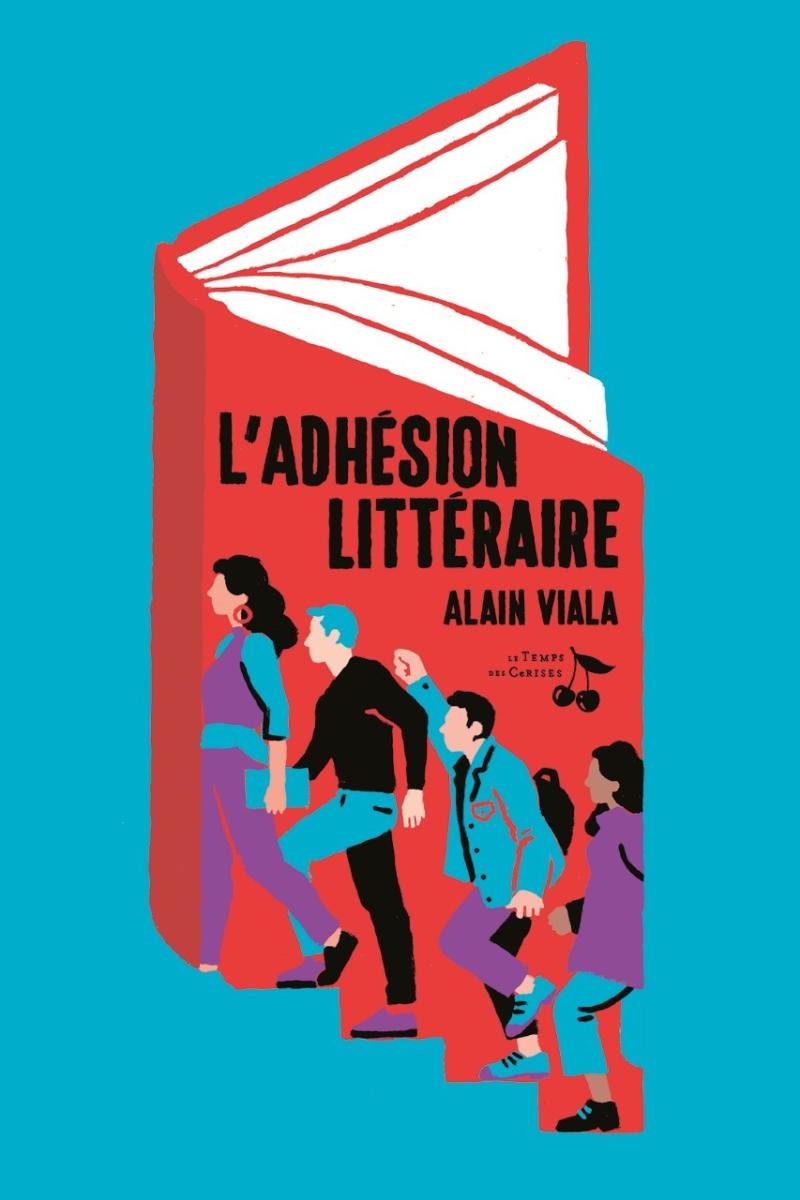
L’adhésion littéraire (Alain Viala)
Posted: 1 Oct 2022 - 00:08

Alain Viala, L’Adhésion littéraire, Le Temps des Cerises, 2022.

L’Adhésion littéraire est un essai court (moins de 200 pages) et d’une lecture aisée, adressé à tous ceux qui aiment la littérature et la font vivre, qu’ils soient simples lecteurs et lectrices, enseignants, bibliothécaires, libraires… Plutôt que de revenir à la vieille question « qu’est-ce que la littérature ? », Alain Viala pose la question : « que faisons-nous quand nous faisons de la littérature ? ». À partir de textes classiques (Racine, Proust) aussi bien que populaires (La Chanson de Craonne), il refuse le discours réactionnaire de la « crise de la littérature », engage un dialogue polémique avec Antoine Compagnon, revendique une conception large et ouverte de la littérature et en affirme la nécessité pour la démocratie.

Pages : 186
Langue : Français
ISBN : 978-2-37071-251-6
Dimensions : 140x195mm
Date de sortie : 08/09/2022

Disponible en librairie et sur le site de l'éditeur.


Louise Dupin, Des femmes Observations du préjugé commun sur la différence des sexes (éd. Frédéric Marty)
Posted: 1 Oct 2022 - 00:03

Louise Dupin,  Des femmes Observations du préjugé commun sur la différence des sexes, éd. Frédéric Marty, Paris, Classiques Garnier, 2022.

Des femmes de Louise Dupin est resté à l’état de manuscrit depuis 1751. En voici la première édition. Dans cet ouvrage féministe majeur du siècle des Lumières, l’autrice défend la stricte égalité des sexes dans une perspective encylopédique. Elle propose un projet global de réforme de la société.

Nombre de pages: 546
Parution: 28/09/2022
Collection: Bibliothèque du xviiie siècle, n° 58
ISBN: 978-2-406-13183-0

Plus d'informations ici.